
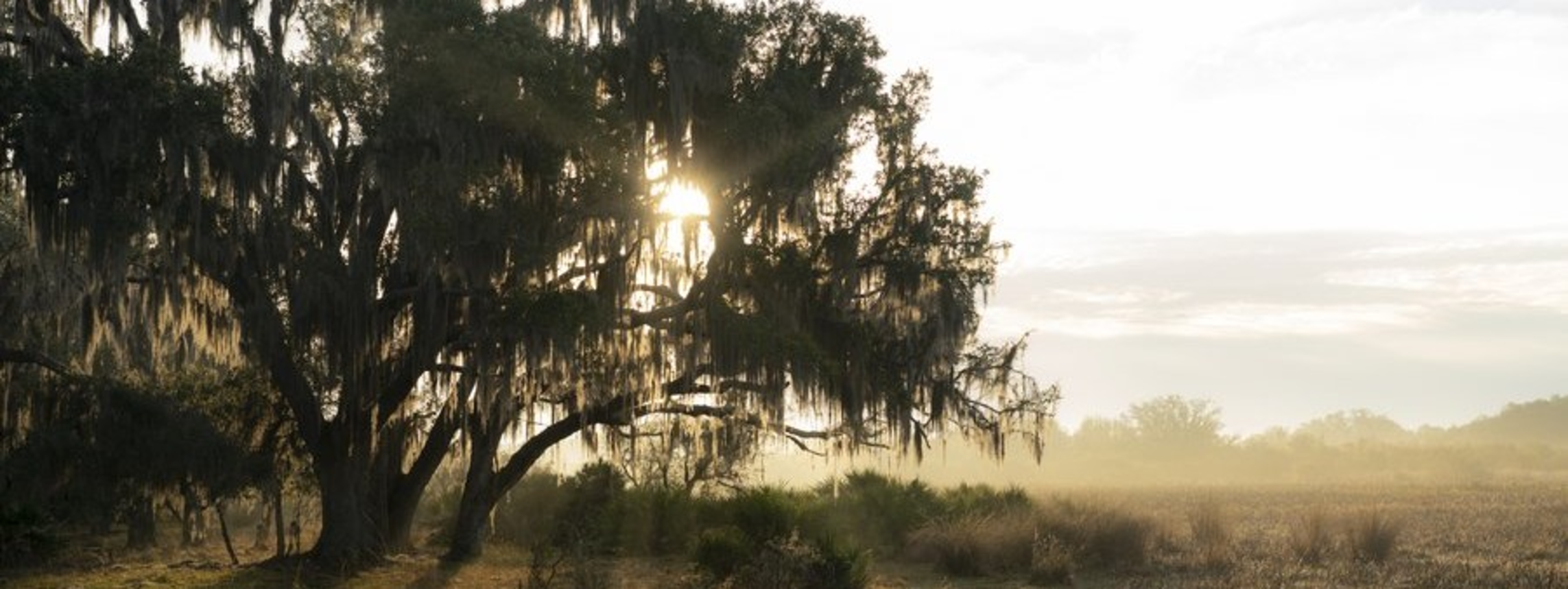
Column: Florida's conservation funding needs drastic increase
The new Florida budget has increased funding for conserving sensitive lands. Land conservation has been a priority for the governor and the Florida Legislature, and the recent funding boost is especially welcome at a time when demographic growth is propelling land values to new heights. In fact, land values have quadrupled since the 1990s, when conservation programs were created and funded until the Great Recession.
Fortunately, new funding has been allocated since the pandemic, but without a consistent and significant long-term source of funding, our good intentions won’t be enough to protect Florida’s most important finite resource.
Protecting the millions of acres needed for the Florida Wildlife Corridor, safeguarding agricultural land and conserving sensitive areas would require at least $1 billion annually for the next decade. Current funding falls significantly short of this amount, but the governor and the Florida Legislature understand the urgency of acting now to seize these opportunities before they are lost.
This year's budget allocates $100 million each to Florida Forever and the Rural and Family Lands Protection Program, which aims to protect important agricultural lands through the acquisition of permanent conservation easements. Additionally, the budget allocates a recurring $100 million and a one-time $100 million from Seminole Gaming Compact revenues for land acquisitions within the Florida Wildlife Corridor, aiming to establish essential wildlife habitat connections.
In most recent years, the Florida Forever Program received a boost of $100 million in 2021 and 2022. Additionally, the Wildlife Corridor Act passed in 2021, adding another $300 million to support the program. In 2022, the state allocated $300 million to the Florida Department of Agriculture and Consumer Services’ Rural and Family Lands Protection Program.
With a backlog of over 150 land conservation projects, these funds were a much-needed injection for programs that had lacked consistent funding for several years but they are not remotely enough.
Unfortunately, this new funding cannot make up for the years of minimal conservation funding since 2009, during which land values have continued to rise. To address this issue, we may need to revisit the successful funding strategies used for conservation programs decades ago.
Back in the early 1990s, when Florida was experiencing drastic growth, the Preservation 2000 program was approved by the Florida Legislature and voters through a 1990 constitutional amendment to fast-track the acquisition of public lands for environmental and recreation purposes. The program protected nearly 3 million acres of sensitive land throughout the state through the issuance of bonds. Preservation 2000 bonds were authorized in the amount of $3 billion in 1990 for land acquisition aimed at outdoor recreation and natural resource conservation.
Part of the premise behind bonding the money was to enable the immediate purchase of property. By doing so, we could stay ahead of escalating property values, which are increasing faster than the interest we would pay on the bond. The state received $300 million a year for a decade to acquire sensitive land, ensuring it remained open and wild for generations to come.
Today, Florida has significant reserves and the option to "go back to the future" by issuing bonds, as we did previously. By generating $1 billion a year for 10 years, we can conserve land before skyrocketing values make our conservation efforts ineffective. This step is crucial to preserving the quality of life for current residents, newcomers and future generations.
Florida's conservation funding needs drastic increase - Tampa Bay Business Journal (bizjournals.com)