
Setting goals for tortoise conservation
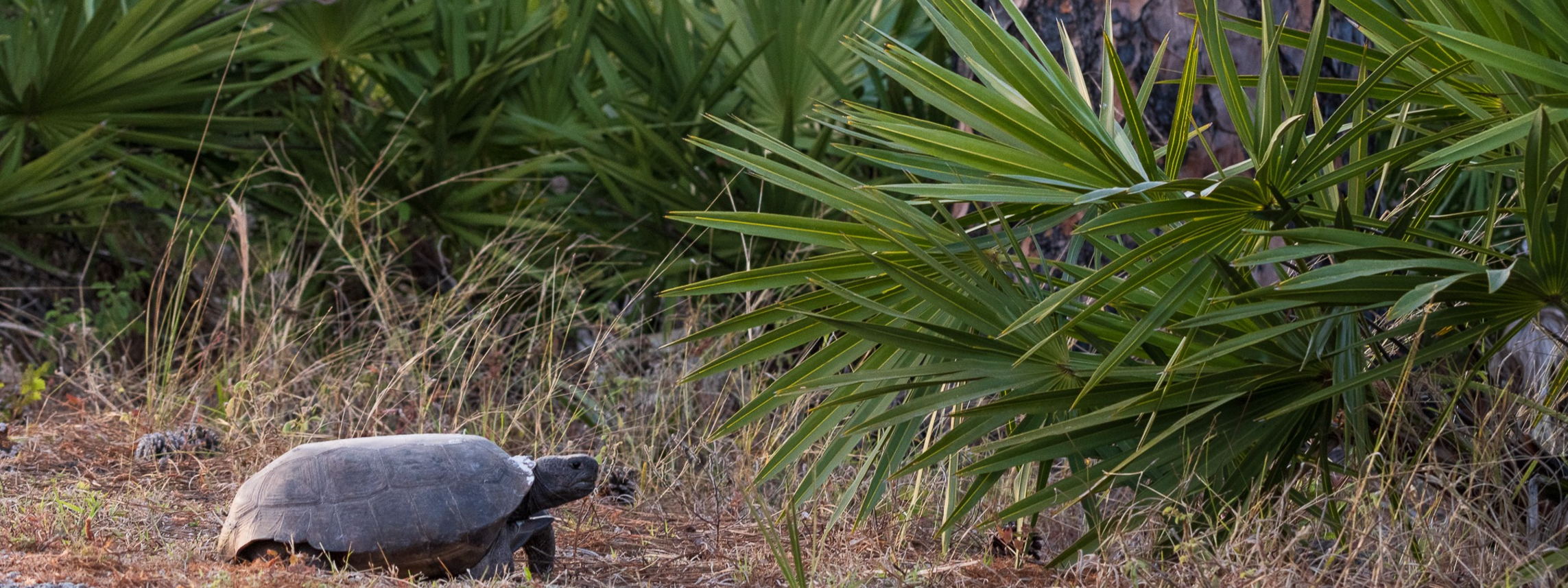
Protecting the gopher tortoise, a classic ‘umbrella species’
Early on, with state wildlife grants, we did a lot of surveys and mapping to identify important habitats for tortoises across Georgia. We realized that we really didn’t have enough protected populations in the state, especially enough protected large populations. We worked with U.S. Fish and Wildlife Service to set a protection goal for the state of 65 permanently protected gopher tortoise populations within Georgia.
We began the gopher tortoise conservation initiative. In 2015, we had 36 permanently protected large populations of tortoises. As of right now, we are up to 65.
The gopher tortoise is a classic ‘umbrella species.‘ It’s found in these sandy soils, a habitat that has declined a lot from historic levels. There are a lot of species that are found there with the tortoise, which was petitioned for listing and was considered a candidate (for protections) until just a couple of years ago.
We’ve also achieved protection for a lot of other species that live with the tortoise like eastern indigo snakes or Florida pine snakes, gopher frogs. As we worked on what we call ‘conservation opportunity areas’ for the state wildlife action plan, we took the approach of identifying large unfragmented areas of habitat. We knew that it’s important for wildlife to be able to move across the landscape relatively unimpeded and have gene flow between populations, or just migration corridors or what have you.
Florida has done some early work with that sort of thing. They have something that they’ve called the Florida Wildlife Corridor, and we looked at them as a model for something that we would like to achieve. It has a lot of bipartisan support in Florida and that’s something that we definitely would like to have in Georgia, too.
Transcript of Brett Albanese, lightly edited
The way we operate right now, we have the state wildlife grant, but it’s not enough to do all the work that we want. We can’t fully implement our state wildlife action plan. So, we end up applying for a lot of other grants, which is great. We’re grateful for those funds, but that takes time and it’s more efficient to have a steady stream that you can count on to start and finish conservation actions.
A steady source of funding like the Recovering America’s Wildlife Act would allow us to do planning on a longer time frame where we wouldn’t just be reactive, trying to come up with a plan on on short notice. It’d be nice to have that steady stream so we could plan way ahead for what we’re going to do to help keep these species and the habitats on the landscape.