
Could Florida's conservation lands soon be sold for agriculture?
Sugar cane farms on land set aside for Everglades restoration? Peanut farming on property that could have been a Florida state park?
That's what some environmental groups are worried about with a proposal buried in a sweeping farm bill, moving steadily through the Florida Legislature, that they argue would "fundamentally change how Florida treats conservation lands."
A section of Senate Bill 290 would direct Florida's environment and agriculture departments to determine whether any state-owned land purchased for conservation since January 2024 is "suitable" for agriculture, according to the bill language.
If a property checks that box, it could be sold off for agriculture, according to the proposal. Under the bill, the then-privately-owned land would still be protected from development with a rural lands easement, allowing for uses like cattle ranching but removing the threat of subdivisions.
The proposal would not apply to state forests, state parks or wildlife management areas, according to the language of the bill, which is sponsored by state Sen. Keith Truenow, R- Tavares on the Senate side and Hillsborough County Republican Rep. Danny Alvarez in the House.
Audubon Florida is one group concerned about the measure, saying that conservation land sold to private agriculture operations would remove the public's access to hiking, camping or recreating.
The nonprofit also said it's worried that newly purchased conservation lands could be "flipped" for agriculture before they receive permanent protections.
"The question should not be: 'Are conservation lands suitable for agriculture?' but rather, 'Is agriculture suitable for state lands?'" said Julie Wraithmell, executive director of Audubon Florida. "It's an incredible overreach, and I would argue it's unconstitutional." Sierra Club Florida also said the bill would centralize land-management decisions under the agriculture department.
Right now, Florida law creates a rigorous process for selling off lands that were purchased for conservation. A committee under Florida's environmental regulatory agency, the Acquisition and Restoration Council, makes a recommendation to the governor and Cabinet then the group must vote on whether the lands "are no longer needed for conservation purposes."
Opponents of the measure say that process would now prioritize land's agricultural benefits over its public use, watershed protection and wildlife habitat.
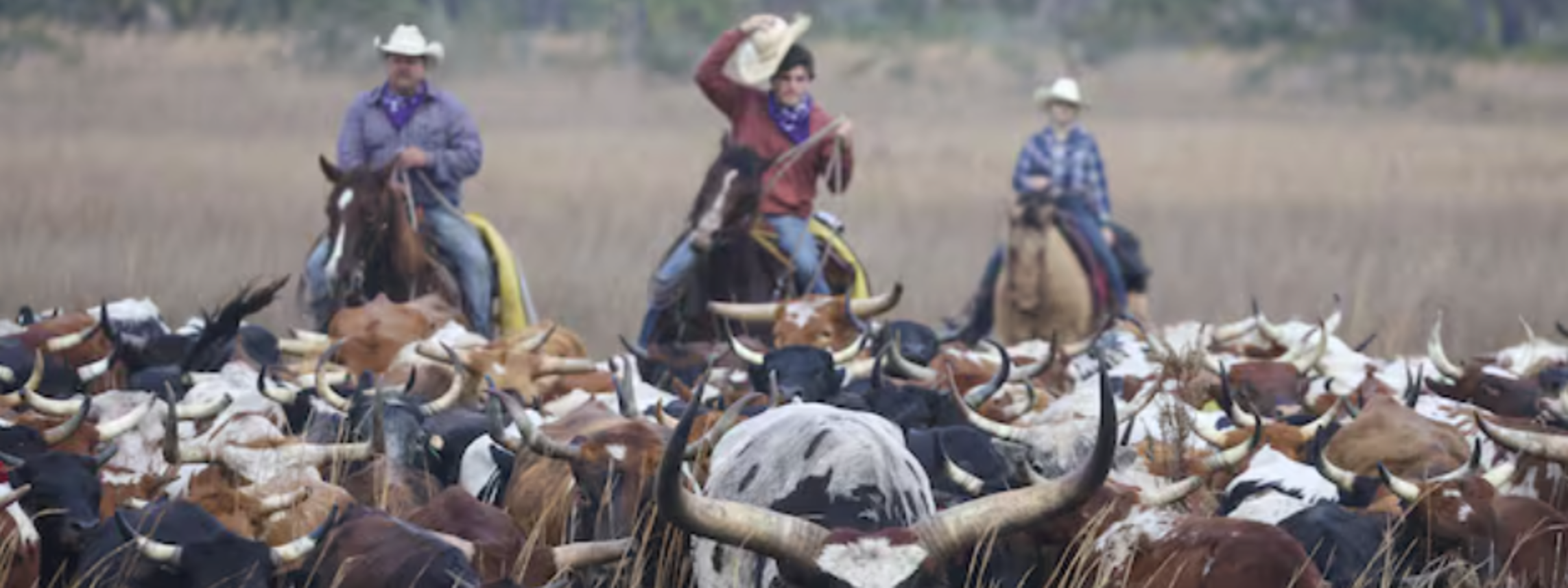
Those in favor of the farm bill, however, like former president of the Florida Cattlemen's Association Pat Durden, say the measure would give a "much better option" for land management by putting state-run lands back into the hands of private property owners, including ranchers whose work maintaining the land draws in and harbors other Florida wildlife.
Proceeds of land sales, according to the measure, would go back into the agriculture department's trust fund for more conservation easements, which Durden said would help expand the Florida Wildlife Corridor.
"It gives us a tool that right now is not really there," Durden said, adding that some state lands are "mismanaged," costly and often overgrown with invasive plants.
"I think it's really difficult for people to understand, without going out on the ranches and seeing that, hey, this is what land management looks like," Durden said.
Neither the Florida Department of Environmental Protection nor the Florida Department of Agriculture and Consumer Services responded to requests for comment. The bill's Senate sponsor, Sen. Truenow, also did not respond to a request seeking comment.
The measure is part of the wide-ranging priority bill, commonly called the 2026 Florida Farm Bill, for the state's Department of Agriculture and Consumer Services. Agriculture commissioner Wilton Simpson has celebrated the bill he said "defends the people who feed our state and our nation."
©2026 Tampa Bay Times. Visit tampabay.com. Distributed by Tribune Content Agency, LLC.