
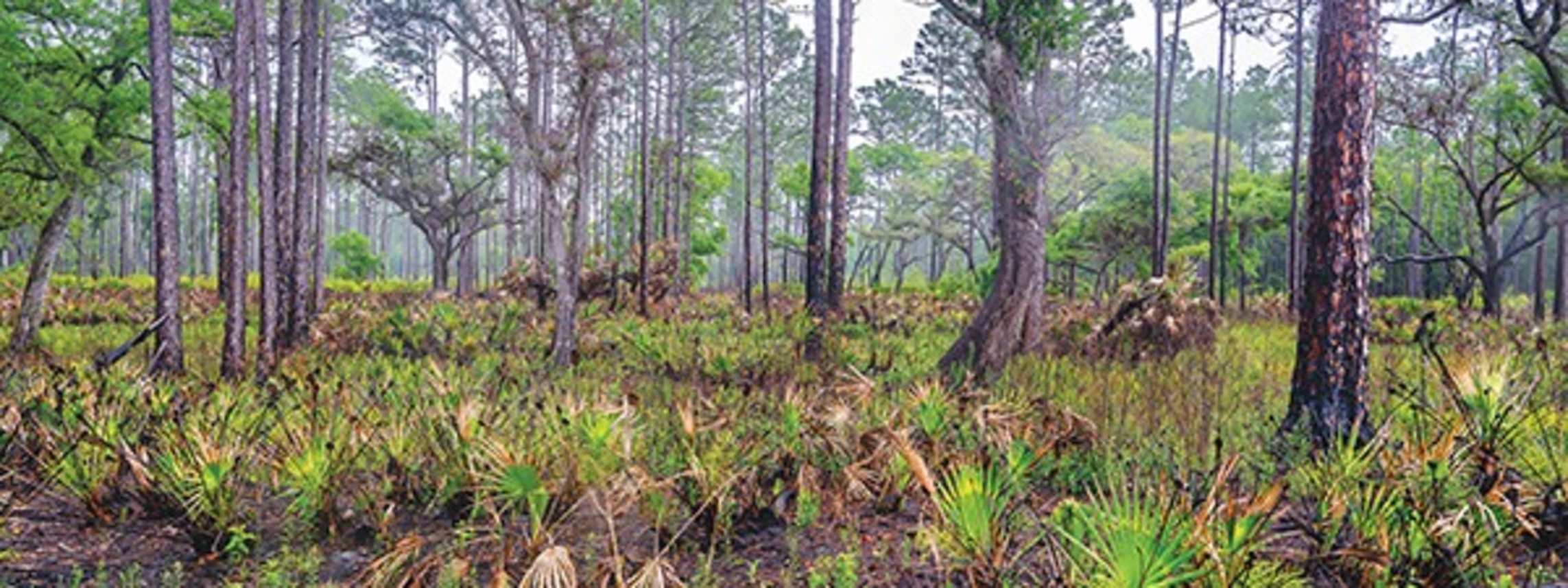
Event planned to show benefits of prescribed burns
Peter Willott on Tuesday, April 7, 2026
Conservation groups are inviting the public to Pomona Park on Saturday for an up-close look at how fire, when used carefully and intentionally, can play a vital role in restoring wildlife habitat and supporting declining bird populations across North Florida.
The event, set from 10 a.m. – 4 p.m. at Dunns Creek State Park, 320 Sisco Road, is being hosted by the Putnam Land Conservancy and the Friends of Dunns Creek State Park as part of the Burning for Birds collaborative, a regional conservation initiative.
Through a combination of live demonstrations, guided tours, and educational exhibits, organizers hope to show how prescribed burning, a long-used land management practice, helps maintain healthy ecosystems and provides critical habitat for fire-dependent species such as the northern bobwhite quail.
“This is important because there are bird species declining because they don’t have the adequate habitat that they need,” said Kiley Robinson, the grant administrator for the Putnam Land Conservancy. “It’s really important to get regular prescribed fire in their habitat so it opens up the understory and allows wildflowers and different plants to grow.”
Attendees will be able to take a tram tour through a designated burn area, where they can observe how land is prepared and managed before and after a burn.
Robinson said the event is designed not only to showcase the science behind prescribed fire but also to address common misconceptions.
“These are experts, and this is something they do across the state,” she said. “This isn’t random. It’s carefully planned and carried out under the right conditions to benefit the land and wildlife.”
Educational stations will be set up throughout the park, featuring local and regional conservation groups, including the Florida Forest Service, North Florida Land Trust, Florida Wildlife Corridor Foundation and others. Visitors can also learn how to identify and track bird species using tools like the eBird and Merlin Bird ID apps.
Fire has long been a natural part of Florida’s landscape, and many native species depend on it to survive, Robinson said. Without regular burns, forests can become overgrown, limiting sunlight and reducing the growth of native grasses and wildflowers that provide food and shelter for wildlife.
“For ground-nesting birds, they need that open space,” Robinson said. “The fire helps create the conditions they need, and it allows those plants they rely on for food to come back.”
Among the species expected to benefit are the northern bobwhite quail, eastern towhee, brown nuthatch and Bachman’s sparrow, all of which have seen population declines due in part to habitat loss.

Joy Mitchell, president of the Friends of Dunns Creek State Park, said the event is aimed at helping the public understand the connection between fire and conservation.
“The purpose of the event is to educate the public on the importance of prescribed burns as far as our native bird species are concerned,” Mitchell said.
Dunns Creek State Park, which is located between the St. Johns River and Crescent Lake, provides an ideal setting for such an event, organizers said.
Spanning more than 6,000 acres, the park features a wide range of natural habitats, including sandhills, flatwoods, hardwood forests and wetlands. Its diverse terrain, rising from creekside areas to elevations of about 125 feet, supports dozens of plant and animal communities.
“It’s an ecological museum, so to speak,” Mitchell said. “It’s very varied in its natural habitat, and it’s important to restore it to its natural burn cycle.”
That natural burn cycle, typically every three to five years, helps maintain the ecosystem’s balance and ensures that native species can thrive.
The event is part of a larger grant-funded initiative supported by the Cornell Lab of Ornithology, which awarded funding to promote bird-friendly land management practices across multiple sites.
According to Mitchell, Dunns Creek State Park was selected as one of five locations to participate in the program, with funding administered locally through the Putnam Land Conservancy.
Researchers and conservationists will monitor bird populations before and after burns to measure the impact of habitat restoration efforts.
“St. Johns Regional Audubon has surveyed the site before the burn and will come back afterward,” Mitchell said. “Hopefully, we’ll see an increase in bird populations because of it.”
While organizers had planned a full day of activities, the live burn demonstration has been postponed due to weather conditions.
Mitchell said prescribed burns require specific environmental conditions, and recent fluctuations, from overly dry to overly wet, have made it difficult to safely conduct the burn.
Although that demonstration will not take place as scheduled, the educational portion of the event will continue as planned, offering visitors an opportunity to learn about prescribed fire and its role in habitat management.
The event will also include food trucks, opportunities to connect with conservation groups and options for visitors of all abilities.
The Florida Trail Association will provide a rickshaw for Americans with Disabilities Act-compliant trail access, and the park’s tram will be equipped to accommodate wheelchairs.
Organizers are encouraging attendees to bring water, wear comfortable walking shoes and dress appropriately for outdoor conditions as they explore one of Putnam County’s most ecologically diverse areas and learn how fire can help preserve it for future generations.
Robinson said the event also represents a new step forward for the conservation program.
“This is our first partnership on public lands,” she said. “It’s a great opportunity to bring the public in to learn more about what prescribed burning looks like and why it matters.”