
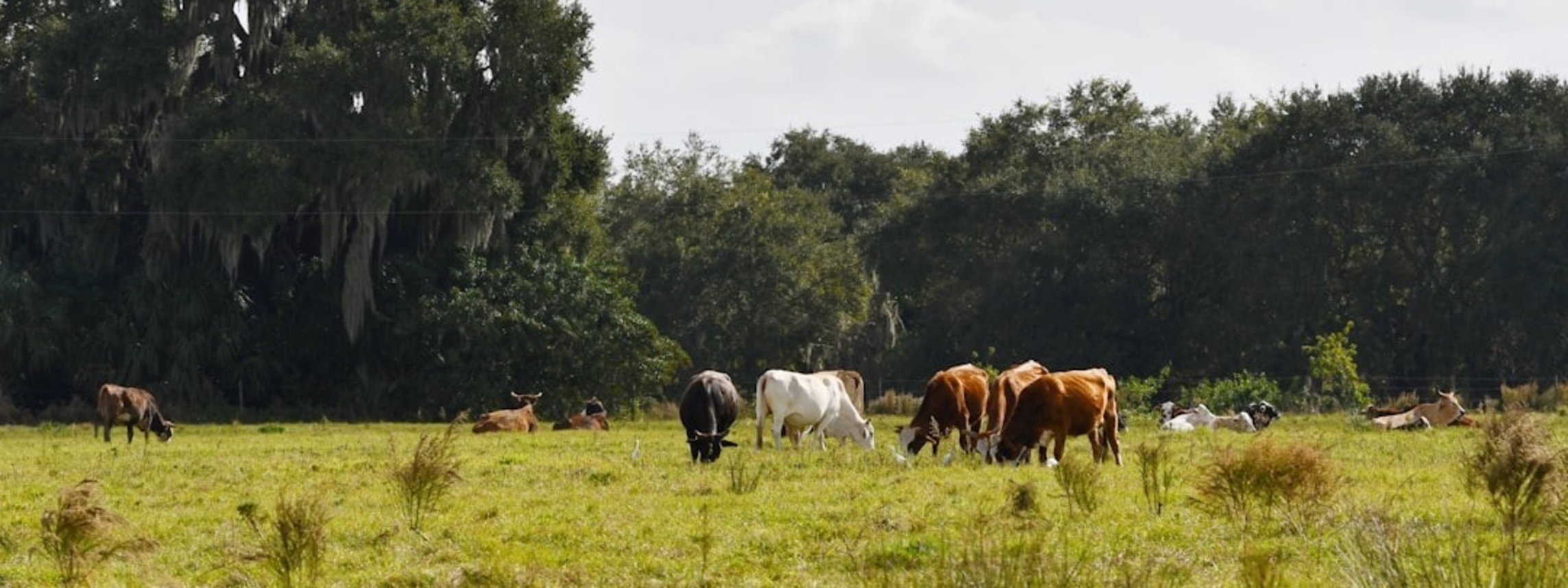
Polk County History Center opens “From Criollo to Cracker: Florida Cow Culture an American Story” exhibit
Cattle ranchers, local elected officials and interested residents assembled last Tuesday (June 9) in celebration of America's 250th anniversary for the opening ceremony of the "From Criollo to Cracker: Florida Cow Culture an American Story" exhibit at the Polk County History Center in Bartow.
"Those of you with us today understand that cattle is more than just an industry," said Polk County History Center Historic Preservation Manager Myrtice Young. "It is a way of life for many generations in Polk County."
And it's a story that still needs to be told.
"Today we celebrate a story that is far bigger than cattle," said Polk County Parks and Natural Resources Director Tabitha Beal. "We celebrate the people, the land, and a heritage that continues to shape Florida in ways that many people may not realize."
"For more than 450 years, cattlemen and women have been stewards of Florida's landscapes," Beal continued. "From the arrival of the first Spanish cattle, Criollo, to the development of the Florida Cracker cattle tradition, ranching families have worked across the prairies, the flatwoods, the wetlands, and the river corridors that define Central Florida."
Beals said that cattle ranchers have been instrumental in preserving natural lands since the beginning.
"Their connection to the land has helped preserve some of the most iconic natural areas in our state," Beals said. "Long before conservation corridors and greenways were a part of our vocabulary, cattle ranches formed a connected network of open spaces stretching across Florida. The historic cattle trails that link ranches and trade routes throughout the Kissimmee Valley, the Peace River Basin, and beyond often follow the same natural landscapes that wildlife depend on today."
In the process, the cattle industry has been at the forefront, even if inadvertently, of Florida's conservation efforts.
"In many ways, the modern Florida Wildlife Corridor mirrors these historic cattle landscapes, hence the Great Florida cattle drive," said Beals. "The vast open ranch lands that supported cattle drives generations ago now provide habitat for wildlife, protect our water resources, provide these scenic vistas, and connect them with Florida's most important natural system."
Beals said that the benefits from the cattle industry to the environment don't stop there.
"Working ranches help permit fragmentation of the landscape, keeping large tracts of land intact, and productive, providing space for wildlife to move across the state," Beals said. "As we explore this exhibit, let's honor the generations of ranching families, many in this room, whose stewardship has protected the green spaces that make Florida unique."
"Their legacy can be seen not only in our history books, but also in the prairies, wetlands, rivers, and ranch lands that remain a part of our landscape today," said Beals. "The story of Florida agriculture is ultimately a story of connection between people and the land, between history and conservation, and between the past and the future. It reminds us that the landscapes we treasure today have been shaped and sustained by your generations of dedicated cattlemen and women…May this exhibit deepen our appreciation for the people whose work helped preserve the lands, waters, and wildlife that define Florida."
This History Center recently partnered with Stacy Butterfield, Polk County Clerk of the Circuit Court and Comptroller, to preserve early cattle brand books.
"Thanks for being here and joining us today, and especially to Myrtice for contacting me many, many months ago about this exhibit and about the potential of having the cattle brand books available as part of the exhibit," said Butterfield. "We partnered so that we could preserve this piece of history for our community so that we can enjoy it and future generations as well. As the Clerk of the Circuit Court and Comptroller…one of my responsibilities is serving as the custodian of our public records."
It's a responsibility that she enjoys.
"One of the most rewarding parts of the responsibility is helping preserve records that tell the story of people and the communities that came before us," Butterfield said. "That's why this project is so special."
Butterfield said that the historic cattle brand books contain records dating back decades, documenting an important part of our heritage.
"Over time, the books, as many of our records do from the past, have become very fragile due to handling," said Butterfield. "So we launched a project to restore the books and preserve them for future generations."
They found more than just a collection of cattle brands. They discovered a Polk County agricultural treasure.
"As we reviewed the collection, we discovered connections to many family names in our ranching histories," Butterfield said. "These books are often more than just records. They help tell the story of their families, the ranches, and the traditions that helped shape our community."
The books are now available in print and online.
"I'm grateful that these books are now preserved and available for the public to enjoy," said Butterfield. "I hope they'll inspire people, especially our students, which are our future generation, so they can learn more about Polk County's rich agricultural heritage and the families that helped build our communities."
Polk County Commissioner Bill Braswell then took a moment to deliver his thoughts to the crowd.
"It's my honor to help open this special exhibition in celebration of America's 250th birthday, our nation's sesquicentennial on July 4, 2026," said Braswell. "This exhibit tells an important part of America's story, the history of cattle ranching in Florida and right here in Polk County. Florida's ranching heritage goes back centuries, long before Florida became a state and before the United States became a leader. The cattle were already part of this land."
Braswell was sure to point out the greater picture.
"This exhibit is about more than looking back," Braswell said. "America 250 gives us a chance to reflect on the journey that began with the Declaration of Independence. A journey built on freedom, opportunity, hard work, and the contributions of many people. Florida played a much larger role in that story than many people realize."
And agriculture was the heartbeat driving Florida forward.
"Ranchers past and present helped shape this state and this region through resilience, independence, ingenuity, and a deep connection to the land," said Braswell. The ranching community we honor today is deeply rooted in tradition. Florida Crackers and early ranching families brought open range hunting, strong family ties, and a fierce spirit of independence."
It's a story that continues to be told, a tradition that continues to evolve.
"These influences create a living heritage passed down through generations," Braswell said. "At the heart of that heritage is...an instinctive understanding of cattle, land, weather and responsibility. It's not learned in a classroom. It's learned in pastures, farms and family traditions. It is wisdom earned through work."
Braswell thinks that it's a fitting time for the exhibit to highlight this important part of our history.
"As we look toward America 250, we have an opportunity to honor the people whose labor, traditions and stewardship helped build this region," said Braswell. "In doing so, we honor not only our past, but also the values that will carry us forward. To the ranchers, historians, elected officials, community partners, and families here today, thank you. Thank you for preserving these traditions, caring for the land, and helping tell a story that belongs to all of us. I hope this exhibition inspires you to reflect, celebrate, and take pride in the heritages that makes Polk County and Florida such an important part of America's journey."
The Polk County History Center is open Tuesday through Saturday from 9 a.m. to 5 p.m. They can be reached at 863-534-4386. The History Center is located at 100 E Main St in Bartow.