
IF YOU WERE writing a book with the above title what would it include? I asked myself this question after hearing about a new book with “the fight for the living world” in its title.
First off, why must we fight? Well, based on many formal assessments and a lot of anecdotal information, about half of the living world is in serious decline, with a sizable part of that in danger of disappearing in the foreseeable future.1
Anyone who cares about life should understand that this fight is the mother of all fights. If only for our own sake, we better get the better of it. It’s a brutal war against what society deems “development” and “progress” even though most environmental advocates still hesitate to frame it as such. (Few wish to give the impression that they oppose a foundational premise of our society, that continued growth is necessary and inevitable.)
What follows is my assessment of “the fight,” one that will hopefully shed light on what’s working and what isn’t and why. Keep in mind that countless strategies and battles to protect the living world have collectively proven inadequate (from the big picture perspective). Let’s ask which of the following have the most potential to turn things around.
Conservancies and Reserves
Conservationists have been battling for a very long time to protect natural places and resources. Can you imagine how worse off the living world would be without the great effort that’s gone into conservation? We routinely get “wins” for the “ground game.” Just this week, for example, I read about:
The forthcoming purchase of a large northern California ranch by The Wildlands Conservancy at a cost of $17 million. This will nearly triple the protected area acreage of the existing 6,100-acre Beaver Valley Headwaters Preserve, home for coho salmon, king salmon, steelhead trout, Roosevelt elk, Columbian black-tailed deer, beaver, black bear, mountain lion, mountain and valley quail, Merriam’s wild turkey, and other native wildlife.
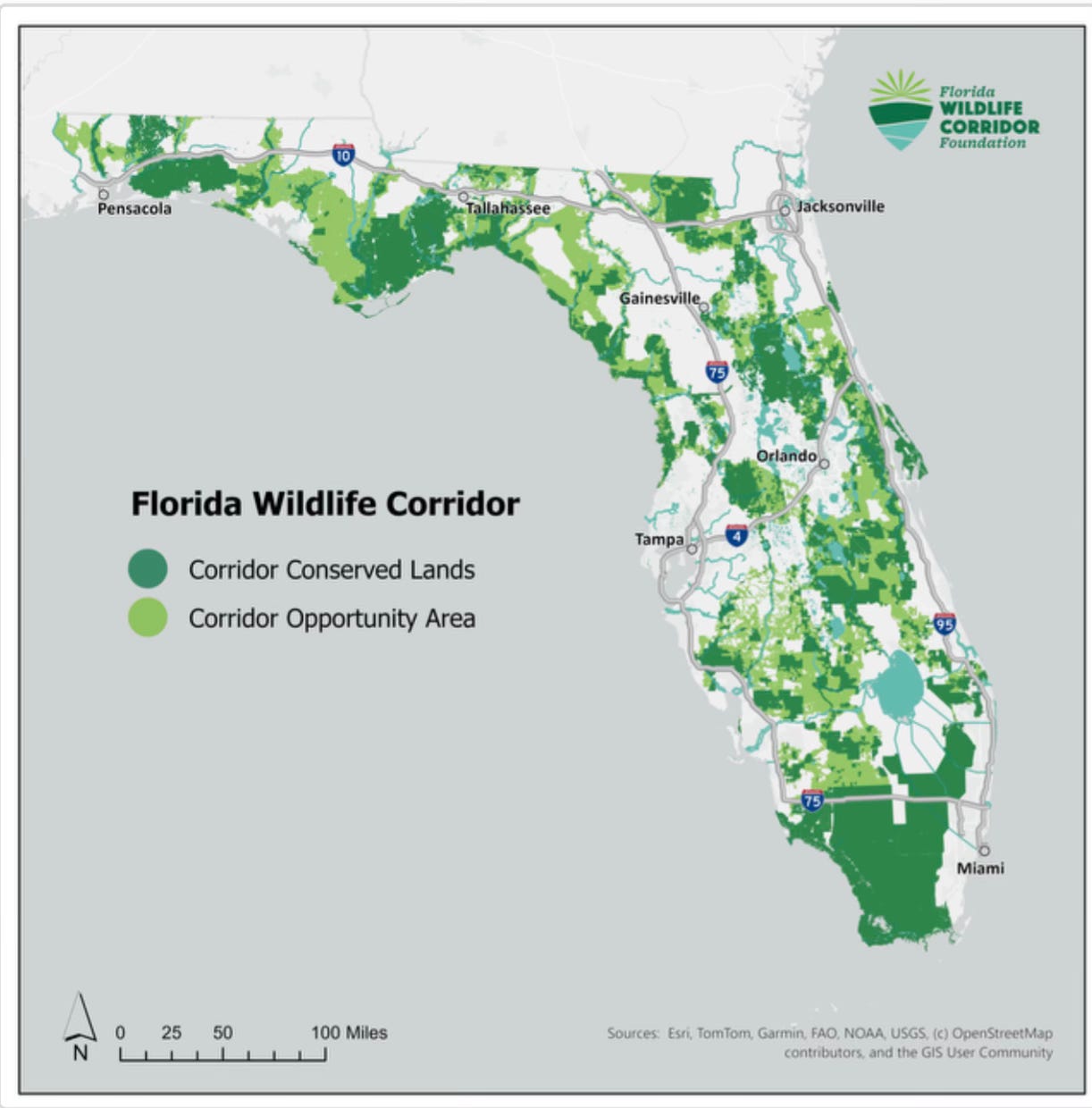
Bit-by-bit progress being made with the Florida Wildlife Corridor initiative to connect existing protected areas with new ones through collaborate private and state efforts. The goal is a 18 million acre corridor from the Everglades north to Georgia and Alabama. The challenge is to safeguard 8 million acres of land that is currently unprotected (see map).
However, here’s the catch: In both states, California and Florida, there’s incredible competition from developers for what’s become very pricey land. There are also serious political challenges in securing the limited funding provided by state and federal governments.
Moreover, the ecological integrity of protected areas is often compromised by internal or nearby impacts from agriculture, livestock, hunting, pollution, and all sorts of recreational activities. Even large and strategically placed conservation areas can be under protected.
Conservationists are rightfully proud of their victories. But are those small potatoes? Modern humans have ecologically degraded nearly all of the world’s terrestrial and marine environments. The scramble to protect what’s left of relatively intact nature faces diminishing returns because of growing human demands.
I sometimes wonder if conservation victories, small in comparison to what’s routinely gobbled up by development, are a “comfort trap” for nature advocates who might otherwise rebel outright against the growth monster. Small wins can defuse the rage and urgency needed to fight systemic ecological destruction.
Restoration
There are countless projects to restore nature across the globe, some undertaken by governments and others by private groups and individuals. As one commentator on Scale Down FB noted: “Wetlands around the San Francisco Bay that were in bad shape when I was growing up in the 60s and 70s have improved dramatically thanks to a great deal of restoration work - some of which is still ongoing. In my hometown salmon and river otters can be seen in the creeks now - if you had told people that was going to happen back in the day they would have laughed at you.”
Another responded: “I agree that there are indeed some success stories with restoration, and I have participated in quite a few myself. However, the overall trend worldwide is towards destruction [of nature].”
Both commentators are right but the latter is especially so, despite the following restoration efforts:
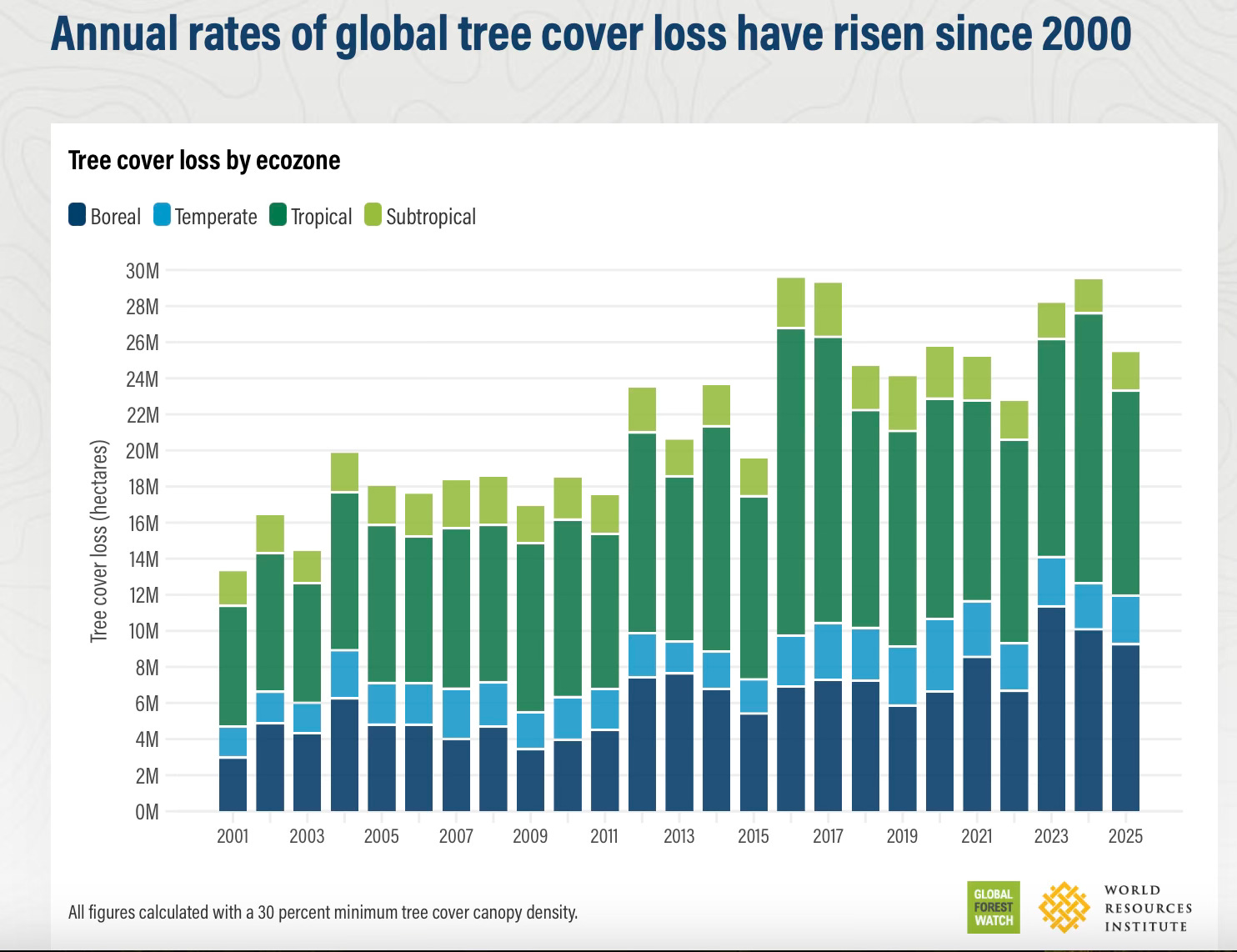
Forest Restoration: Efforts are ongoing throughout much of the world but there’s much uncertainty as to the likelihood of success. Deforestation continues to outpace restoration, measured in terms of area coverage and ecological integrity.
Wetland Restoration: All major wetland categories have suffered declines since 1970. Wetland conservation remains far below that required to meet global goals. Key drivers of wetland loss and degradation include urbanization, agricultural expansion, industrial growth, pollution, and non-native species invasions.
River and Floodplain Restoration: Global recovery efforts can’t keep up with ongoing degradation caused by nearby land disruptions, pollution, dams, and climate change. At least we can take comfort from occasional news about dam removals and other efforts to let rivers flow naturally in order to restore freshwater life.
Marine and Coral Reef Restoration: Degradation of marine ecosystems vastly outpaces efforts to restore them, despite localized success in recovering depleted fish populations, curbing marine pollution, and replanting corals and sea grasses.
Grassland Restoration: A recent analysis shows continued conversion of the world’s grasslands to pastures and croplands. An earlier assessment gave mixed results but indicated overall improvement for grasslands. At least some of this had to do with restoration work as opposed to swings or changes in climate. However, the study did not distinguish between altered and fully natural grasslands, or indicate the quality of recovered grasslands in terms of native/non-native species and other factors. Less attention is paid to the world’s shrublands, which are increasingly affected by acute climate events and impacts from land development, invasive species, and altered fire regimes.
Desert Restoration: Paradoxically, the world’s deserts are ecologically degrading and expanding at the same time due to a range of human activities and climate change. For example, the Gobi Desert is rapidly spreading largely because of intense overgrazing by livestock. Meanwhile, the Sahara Desert continues to advance southward, triggering massive efforts to conserve transitional lands. The Arctic Desert is undergoing permafrost thawing and release of naturally trapped methane, adding additional greenhouse gas emissions. Living deserts are increasingly impacted by mining of high-demand metals like copper and lithium, and more broadly by expansive renewable energy layouts.
Wildlife Restoration: Efforts to manage wildlife have been ongoing for a long time, driven largely by interest in huntable or fishable “game and fish.” Restoration efforts are designed to recover or retain wildlife populations while minimizing conflict and inconvenience to humans. This generally assures that “recovered” populations will be smaller and less distributed geographically than they were historically. Nevertheless, thanks to restoration work, hundreds of species have been saved from further decline, others have improved, and some pulled back from the brink of extinction. Restoration success stories are sometimes publicized to garner support for expanded efforts or to assuage public concerns about declining wildlife. Excessive optimism over success stories can mask the reality of the living world’s decline.
Invasive Species Removal: The global spread of invasive non-native species continues at a head-spinning pace, and far outruns efforts to remove or control them. The problem ultimately stems from massive global trade. Fast-spreading exotic species hitch rides on ships, planes, and other conveyances, or are unwittingly introduced by people and agencies who can’t comprehend consequences or don’t care. More than 37,000 invasive species are now established worldwide. Given the huge costs and complexities of removing them, success is generally restricted to small areas with positive results for some islands and northern Europe.
Most, but not all, restoration work is conducted to benefit humans. This anthropocentric bias is evident as to where, how, and to what degree restoration takes place. Restoration prioritizes areas that protect human infrastructure and agriculture, or where it may improve air quality, recreational opportunities, and property values. It’s typically avoided when it interferes with agriculture, industry, transportation, and urban growth.
Rewilding
Enter Rewilding, or “ecocentric restoration,” a quest to restore nature by reducing or ceasing human activity over significant areas, and by planned reintroduction of native wild species, especially those that can help restore ecological balance across broad landscapes. The Rewilding movement is founded on both pragmatic and moral concerns for the living world. It got a significant boost when nearly 200 countries endorsed a commitment to effectively protect 30% of the world’s terrestrial, inland water, coastal, and marine areas by the year 2030 (often referred to as 30x30).
However, with four years to go, only 20% of land and 10% of ocean is designated “protected,” with differing opinions as to what degree of protection is adequate. Most notably, Rewilding has made headway with removal of dams and species reintroductions, including large predators.
It’s a tribute to the young movement that some mainstream organizations and a host of new ones have adopted the Rewilding banner. However, the larger upstarts look much like juiced up conventional conservation organizations, which is great in terms of increased private financing for conservation but questionable as to commitment to broad recovery of the living world (as expressed in the Nature Needs Half Declaration). Ecological assessments indicate that, on average, about half of each of the world’s ecological regions need protection in order to conserve species, ecological processes, and natural evolutionary processes.
From what I can tell, rewilding organizations don’t touch the problem of human overpopulation, with the notable exception of the Rewilding Institute. That’s too bad. It’s inconceivable that ecological justice can be served without major shrinkage of our vast (and still rising) numbers.
Legal Resistance
There are countless laws and international conventions intended to protect the human environment from degradation and pollution. Many are dedicated to conserve wildlife and ecosystems.
Environmental laws are often partially or wholly ignored. In an effort to correct this, environmentalists appeal to enforcement agencies in writing and at formal hearings. Getting citizens to speak out has been a fundamental strategy of environmental organizations. Sometimes agencies respond favorably but often they don’t, generally because strict enforcement of environmental law conflicts with economic interests backed by strong political support. When petitioning fails, environmentalists often take legal action aimed at the agencies or directly at violators of law.
Until recently, environmental law disallowed protection of the living world for its own sake. Wildlife laws are mainly designed to sustain wild animal populations for sustainable exploitation and use. For example, the U.S. Bald Eagle Protection Act (1940), which proscribed killing eagles, was meant to protect a national emblem of patriotic value rather than an animal’s inherent worth to itself. Likewise, the U.S. Endangered Species Act (1973) was enacted because “species of fish, wildlife, and plants are of esthetic, ecological, educational, historical, recreational, and scientific value to the Nation and its people” (my emphasis).
But times may be changing. A globally significant Rights-of-Nature movement is underway, one that fights to grant wildlife, ecosystems, and other natural entities “standing” in the eyes of the law. This means that people can go to court on behalf of natural entities without having to prove they are personally harmed by harms to nature. The effort seeks to strip away the extreme anthropocentric bias that characterizes environmental law.
How successful has legal action been to protect the living world? The truth is not very. Lawsuits have had success at abating many of the worst abuses, and at saving some specific species from imminent extinction. However, because of generally weak environmental laws, lawsuits remain largely impotent against systemic abuse of nature. We should celebrate legal victories for nature while avoiding the “comfort trap” mentioned above.
Indigenous Defense
A review of over a hundred studies on Indigenous land conservation indicates that in most cases (75%) “Indigenous lands delivered outcomes at levels comparable to or exceeding those of protected areas.” It focused on tropical areas (64%, mainly in Amazonia) with primary positive measures being forest and vegetation cover (56%) and animal/plant diversity (32%).
The results of the review are consistent with a growing consensus that Indigenous lands tend to be in better ecological shape than most others.
Indigenous lands are estimated to cover about 22% of the global land surface and about 37% of remaining natural lands, much of which is located in sparsely populated areas. Indigenous Peoples comprise only about 5% of the global human population. Clearly, they’re at the forefront of the fight to protect the living world.
A paper on the importance of Indigenous land for conservation describes a primary reason as to why: Indigenous Peoples often express deep spiritual and cultural ties to their land and contend that local ecosystems reflect millennia of their stewardship…Countless Indigenous management institutions have already proven to be remarkably persistent and resilient, suggesting that such governance forms can shape sustainable human landscape relationships in many places.
Bear in mind that, like everyone, Indigenous Peoples have multiple economic, political, and cultural interests, and in most cases are subject to serious pressure from exploitive economic and political interests.
Grassroots Revolt
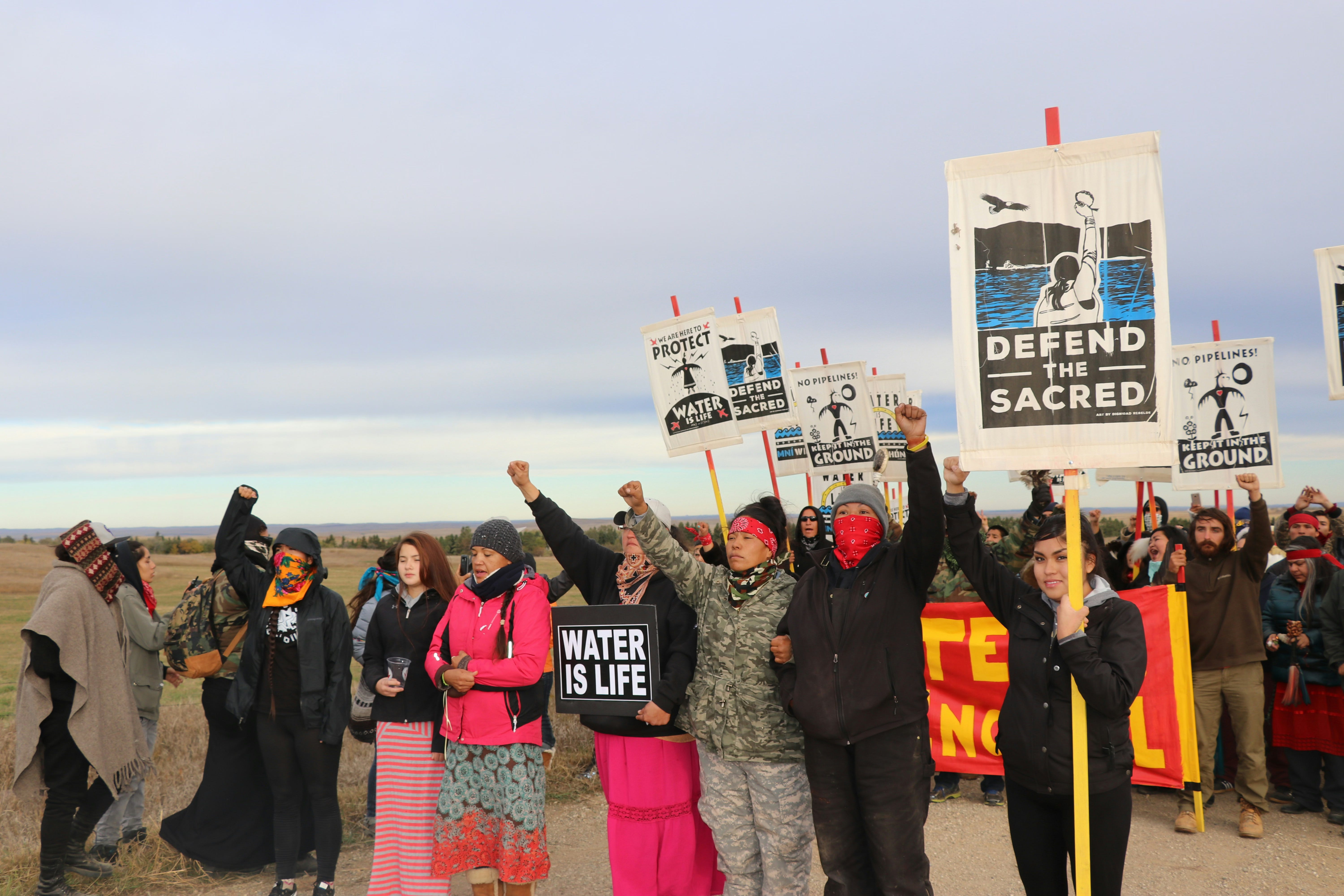
Thousands of small environmental groups are fed up with the world’s governing establishments and even with the shortcomings of mainstream environmental organizations. Sometimes they act alone but often coalesce to protest and take legal action. Their strategies are normally tailored to local and regional battles and may include civil disobedience, activist leadership building, solidarity with oppressed human communities, and sharp public attacks on prominent destroyers of nature. Among groups I follow are Blue Earth Defense and Extinction Rebellion.
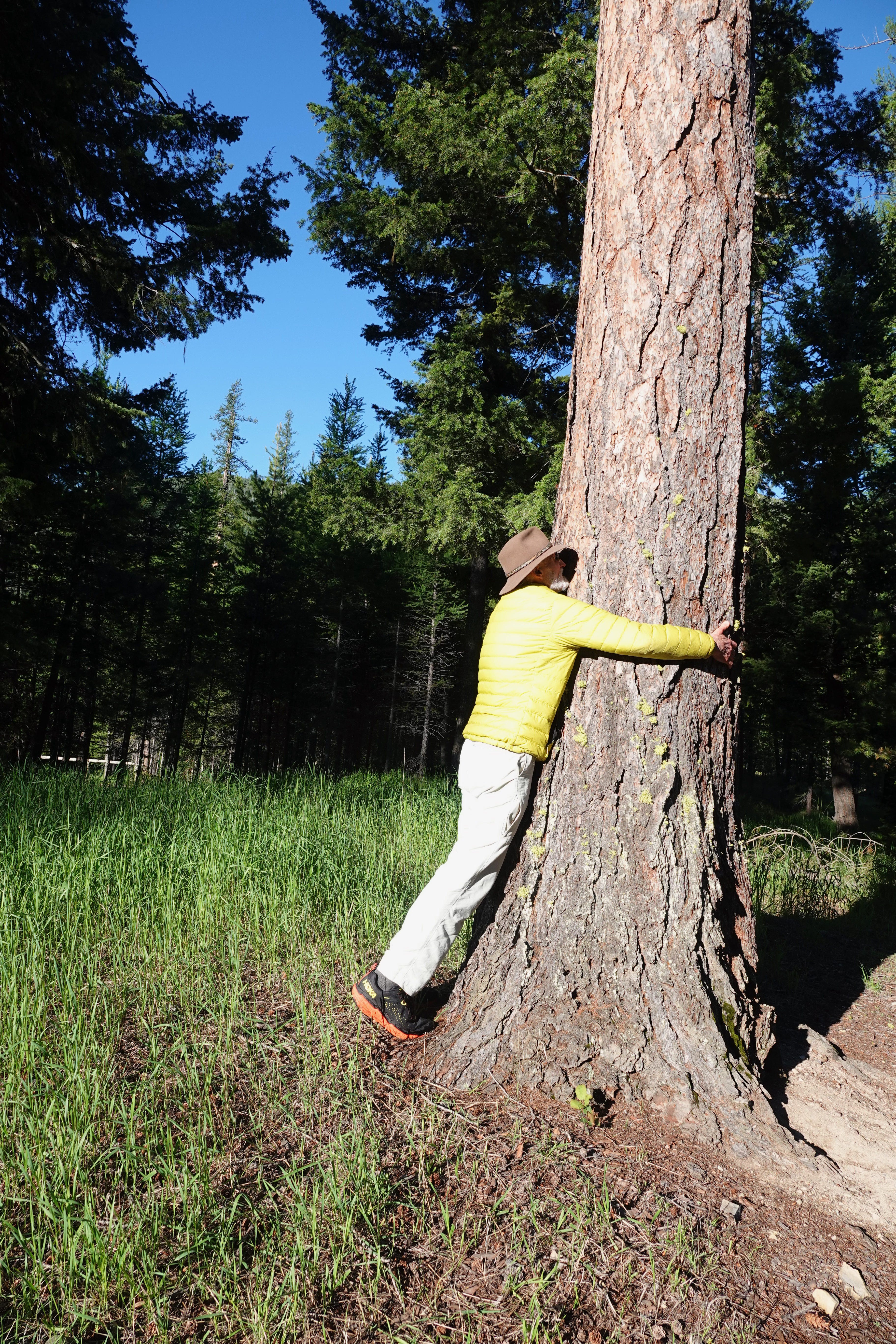
Another rebellion is underway by people who reduce their personal impacts on the living world by changing their behavior (diet, travel, etc.) and restoring nature at or near their homes. The collective effect of this is likely significant and lends hope for broader cultural change.
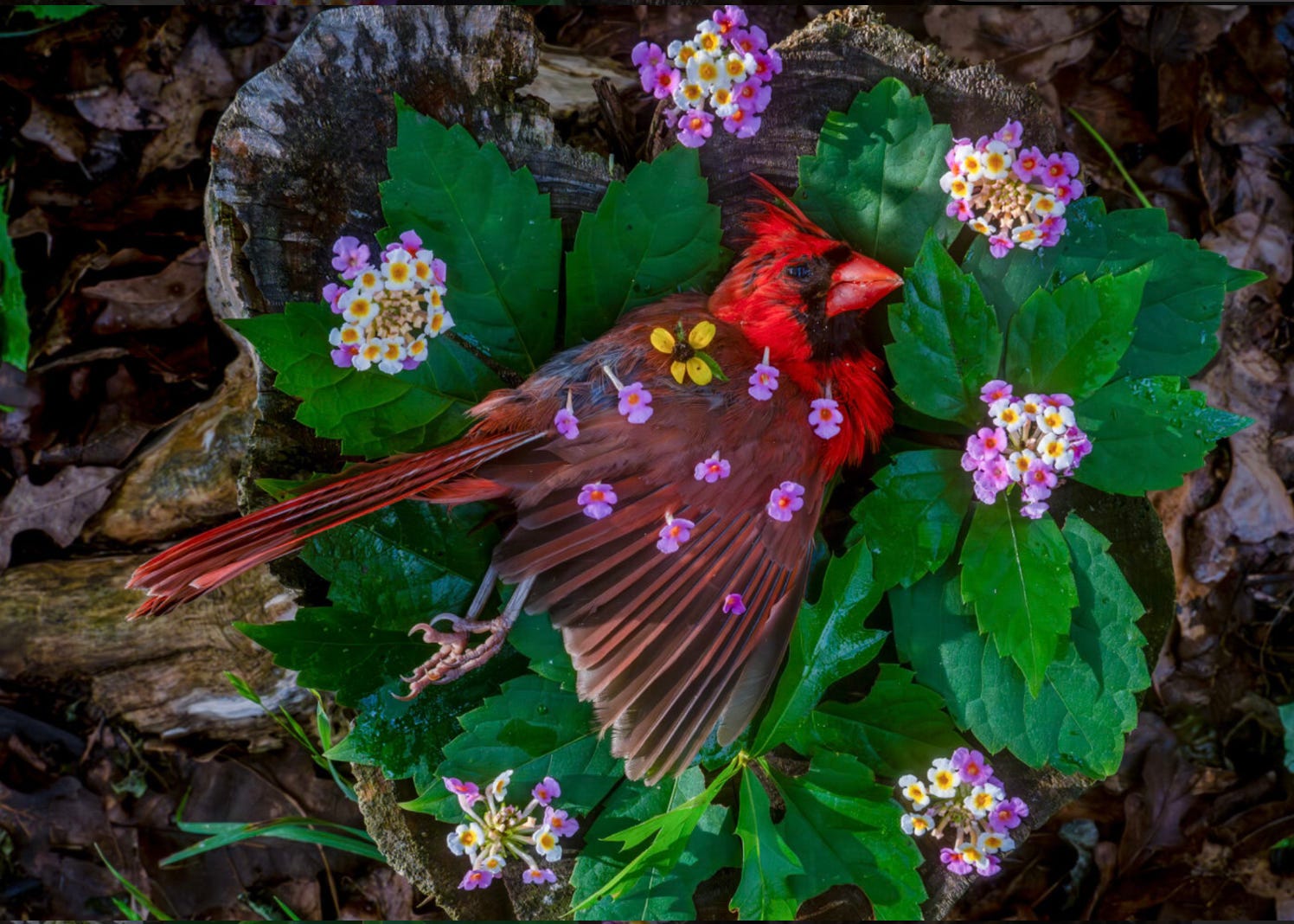
Finally. there’s a “soft revolt” by poets, artists, storytellers, educators, writers, and others who convey their love and respect for the living world. Part of the public is responsive to their messaging, part of it is not.
Alternative Energy
While habitat destruction and deterioration top the list of threats to the living world, climate change is now ranked right up there with wildlife exploitation, pollution, and invasive species. Environmentalists believe that the primary solution is replacing fossil fuels with solar/wind energy. However, that goal is far more challenging than it might seem, given how dependent our civilization is on fossil fuels2 and given the negative effects of renewable energy on the living world.
In order to sufficiently limit global warming, the International Energy Agency estimates renewable energy must replace at least 65% of that currently produced by coal, oil, and natural gas in less than 25 years. That seems highly improbable given growing energy demands caused by rapid industrialization in emerging economies, artificial intelligence and hyperscale data centers, air conditioning/cooling, and much more. World energy consumption has been projected to increase by nearly 50% from 2020 to 2050, driven by economic and population growth.
Unfortunately, renewable energy is not, by any means, ecologically cost free. Large-scale buildout requires huge amounts of land, water, and other resources, extensive mining, release of hazardous materials, and massive expansion of transmission lines, related infrastructure, and roads. It is also heavily dependent on fossil fuels.
Finally, energy development of whatever stripe drives further conventional economic growth with corresponding ecological consequences. World governments have shown virtually no interest in reducing consumption in order to cut greenhouse gas emissions and avoid further destruction of nature. Without a drawdown of energy consumption, the future of the living world looks grim. I’ve addressed these concerns in previous essays.
Fighting Root Causes
Nothing grows forever. That includes the global economy. A tremendous amount of thought and analysis has gone into this matter since 1971 when Nicholas Georgescu-Roegen, a mathematician and economist, published The Entropy Law and the Economic Process, a book that described how economic activity irreversibly degrades and depletes natural resources.
A year later, a landmark report entitled The Limits to Growth used computer modeling to show how global growth of the human enterprise would breach planetary boundaries (as they have). Since then, a large number of intelligent people have advocated degrowth policies that would promote wellbeing of the living world.
Degrowth can be defined as the planned reduction of production and consumption as a solution to social and ecological crises. It’s making headway in some policy circles but no governments or major international organizations have endorsed it. The main reason is that growth is a deeply entrenched ideology of industrial civilization that’s incessantly promoted by politicians, businesses, corporate media, and the vast majority of the world’s economists. “Green growth” is the latest label for “sustainable development,” which has failed miserably to prevent the living world’s decline.
Some environmentalists, including myself, promote “scale down” as a stepping stone to degrowth. The idea is to build a social movement that rejects addictive consumerism in favor of sufficiency living and social, spiritual, and environmental wellbeing. Degrowth policies will stand a far better chance of adoption by political leaders if growing numbers of people insist on alternative, wholesome ways of living.
To be honest, I’m concerned that the degrowth movement may become exclusively leftist with limited public appeal, one that’s focused on attacking capitalism and the world’s middle class (i.e., the majority of humans), as well as the wealthy. I’m also concerned that it will turn increasingly anthropocentric, and reject ecological justice for the entire living world.
Likewise, I’m troubled that the degrowth movement has, for the most part, distanced itself from people and organizations that understand that overpopulation is a major cause of the living world’s destruction. The consensus seems to be that the ecological crisis stems merely from hyper-consumption in wealthy nations. I can’t imagine that leaders don’t understand the implausibility of significant economic degrowth while a population of 8.3 billion aspiring humans continues to grow.
An excellent peer-reviewed analysis finds that Earth’s carrying capacity for humans is about 2.5 billion people, and that “the Earth cannot sustain the future human population, or even today’s, without a major overhaul of socio-cultural practices for using land, water, energy, biodiversity, and other resources…As such, some form of societal downscaling appears inevitable, whether achieved actively or in response to continued declines in population growth [fertility rates].”
Environmentalists who comprehend the tight connection between population and economic overgrowth are best positioned to fight for the living world. Leading organizations include Population Balance, The Overpopulation Project, and Population Connection.
Justice Advocacy
Fortunately, there are a lot of people the world over who are fighting against injustice toward people, animals, and more broadly other life. Some of the pushback is well organized, some of it is diffuse and reflects personal motivation. Those fighting for social justice, animal rights, and the living world often involve like-minded people and moral allies. But sometimes there’s little overlap and a degree of antagonism between them.
The social justice movement, which includes civil rights, labor rights, racial equality, gender equity, economic justice, and environmental justice, is much larger and more mainstream than the animal rights and ecological movements. Ecological justice is generally considered a subset of broader social justice.
Can social justice help rescue the living world? It depends on whether it can reduce competition between humans and other life for the world’s resources and living space. That is problematic. I previously explained why social and ecological justice are two different things that should not be conflated.
The book I referred to in the opening paragraph of this essay is called End Times Fascism: And the Fight for the Living World by Naomi Klein and Astra Taylor. It apparently blames the living world’s destruction on fascists, specifically greedy billionaires, authoritarians, and right-wingers. Klein believes that “this is fascism with a difference. Its proponents are actively willing an apocalypse, or a wave of interconnected apocalypses brought forth by climate change and financial chaos, to hasten us towards a post-democratic world in which only a rich few survive to prosper.”
Certainly, today’s billionaires and their allies are fueling the ecological crisis. However, I doubt their collective goal is apocalyptic self-destruction as opposed to advancing human supremacy. Maybe reading the book will convince me otherwise (but see these reviews).
Here’s my take on this debate: We have a moral duty to oppose authoritarianism and any system of governance that disregards the wellbeing of the living world. However, eliminating fascism will not by itself lead to more protected areas, more ecological restoration work, rewilding of half Earth, legal rights for nature, conservation of indigenous lands, a cultural shift toward biocentrism, a downscaled global economy, or a significantly smaller world population of humans.
Major social and political reforms are needed (those against fascism included) but let’s be clear—the fight for living world is a fight for ecological justice, sensu lato. I can’t imagine that any society or political system grounded in extreme anthropocentrism will make the adjustments needed to save the living world.
Naomi Klein reveals that she “made a choice to live very close to nature in a pretty wild part of British Columbia…On a dark night, it’s a blanket of stars. And now we see so many of what I call Elon’s space bugs [Starlink satellites] just crawling through the sky. He wants to increase that a hundredfold. Who said he could? Who gave him that right? That’s a place where I find my anger. I get really angry about the stars. I get really angry about the orcas…We have to find our places of deepest love and fight like hell.
Yes! Every human should have the right to live on a pretty wild Earth.
Footnotes
The living world includes a vast number of beings that are classifed by science into “species” of closely related individuals. There are about 9 million species, though estimates range widely.
The IUCN is able to track more than 175,900 species of which over 49,500 (~28%) are considered threatened with extinction, “including 44% of reef building corals, 41% of amphibians, 38% of trees, 38% of sharks and rays, 34% of conifers, 26% of mammals, 26% of freshwater fishes and 11.5% of birds.” A large number of other species not currently listed as threatened have declining populations.
A 2023 analysis of population trends of more than 71,000 animal species (mammals, birds, reptiles, amphibians, fishes, and insects) indicated “widespread global erosion of species, with 48% undergoing declines, while 49% and 3% of species currently remain stable or are increasing, respectively.”
The 2024 edition of the Living Planet Report, which measures the average change in population sizes of more than 5,000 vertebrate species, shows an average decline of 73% between 1970 and 2020.
If there is any good news about wildlife population trends I’d like to hear it. One of the latest reports (June 2026), this one on the world’s migratory bird species, found that more than half (51%) are declining.
Solar and wind power account for about 5% of the global [final] energy consumption, comparable to that of other “clean” energy sources like hydroelectric. Biofuels and nuclear power (about 7% and 5%, respectively) have their own limitations and environmental impacts. In short, fossil fuels still account for nearly 80% of global energy consumption. These figures are based on my online searches and review of multiple reports. Surprisingly, I have not found a report that clearly shows the current contribution of each energy source to total world energy consumption, even after an AI search. This one comes closest. Please let me know if you’re able to find something better.