
How the Florida Wildlife Corridor Can Lessen the Impacts of Climate Change
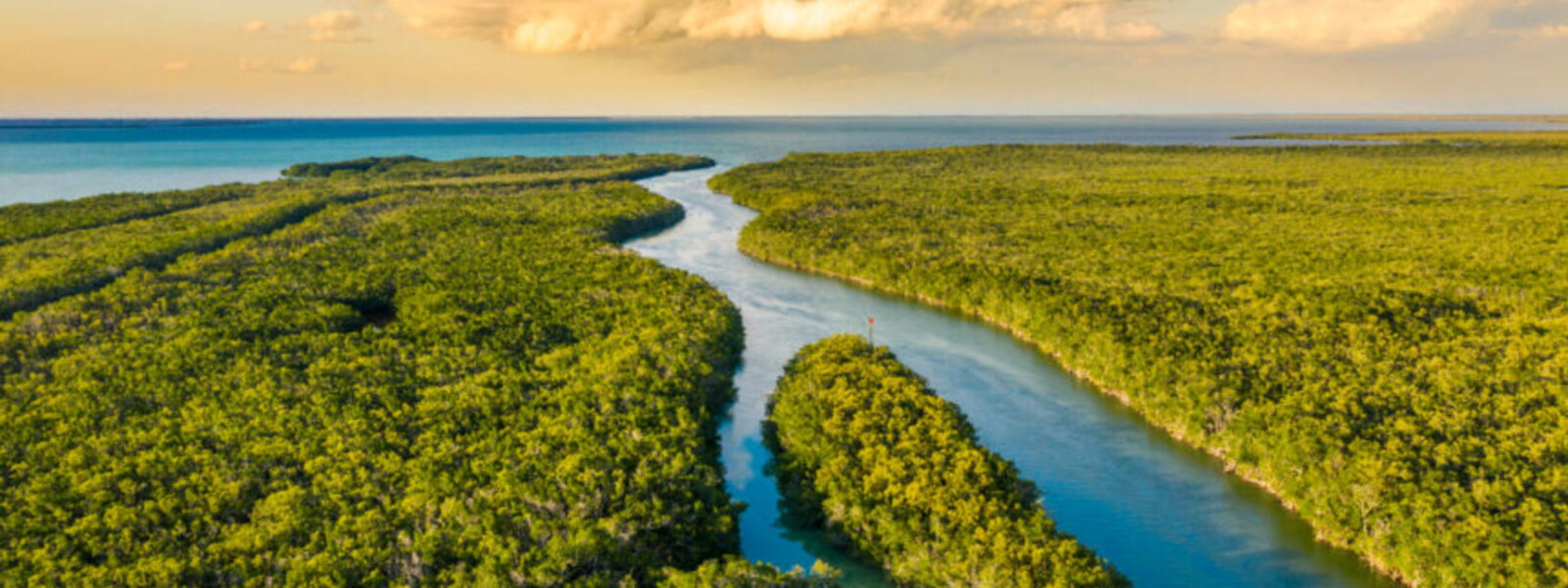
The Florida Wildlife Corridor (FLWC) is a marvel. Connecting 18 million acres of land and water across the state, the corridor supports endangered wildlife and protects open space. But a new study produced by the Archbold Biological Station and Florida Atlantic University found that this corridor doesn’t just protect wildlife—it also protects Floridians from extreme weather and natural disasters.
Florida’s geography and topography make it extremely vulnerable to flooding, particularly in the wake of a hurricane. According to the report, 24 percent of properties within the state have a more than 25% chance of being impacted by floodwaters over the next 30 years. But two-thirds of Florida’s floodplains (flat areas that are likely to flood) are now contained within the boundaries of the FWLC. 63 percent of that land has already undergone conservation efforts. These floodplains provide a natural buffer zone when storms hit and rivers and waterways rise which protects citizens, homes, and properties from flooding.
The economic benefit of flood control ecosystems—including floodplains—is large and can range from hundreds of dollars per acre for forests to thousands of dollars per acre for coastal wetlands, according to FEMA. Conversely, a loss of wetlands resulted in a $430 million increase in property damage from Hurricane Irma in 2017.
“The FLWC provides billions of dollars of flood hazard protection, a vital service as precipitation volume increases under climate change,” write the study’s authors. “A large part of this benefit comes from keeping floodplains undeveloped and natural coastal vegetation in place.”
The FLWC also plays a part in protecting Floridians from wildfires. Florida is a national leader in prescribed burns, which reduce fuel loads in forests and make wildfires less deadly and intense. According to the Florida Fire Service, professionals conduct prescribed burns on an estimated 2.1 million acres of land annually. The FLWC makes it easier for state officials to conduct active fire management techniques. As the report explains, “The more that new housing and infrastructure is scattered, the more difficult it becomes to manage fire risk. Large blocks of conserved connected lands ease prescribed burns and wildfire control.”
Authors of the study also noted that 40 percent of the state’s agricultural land is within the FLWC and can help contribute to climate resilience:
“The FLWC incentivizes keeping working lands in production, preserving their climate benefits while protecting farmers, billions of dollars of agricultural revenue, and valuable livelihoods. Farmers can contribute to climate resilience by implementing climate-smart management solutions.”
Continue reading the article by Kelvey Vander Hart at How the Florida Wildlife Corridor Can Lessen the Impacts of Climate Change (c3newsmag.com)