
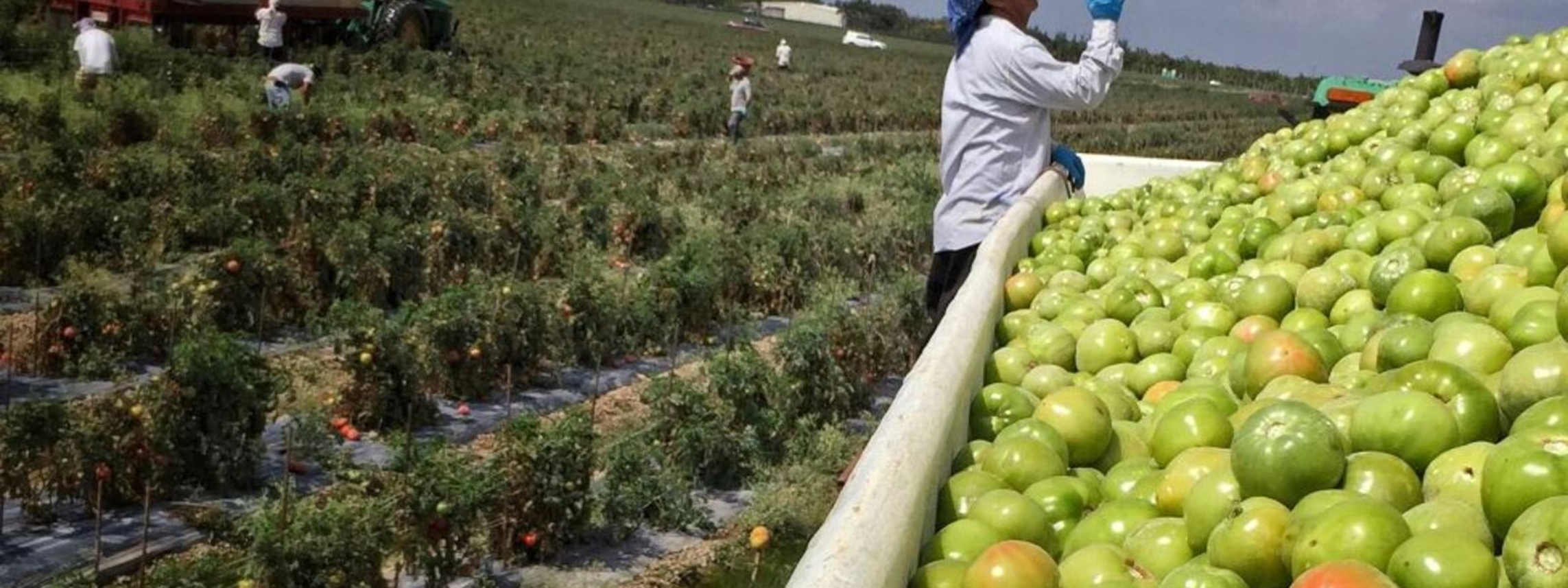
Florida is actually a top farming state. But that status may not last.
There’s nothing like savoring delicious strawberries, tomatoes, and green peppers in wintertime. But in the United States, much of these winter crops are grown in Florida, and farmland there is rapidly disappearing.
A new report by the University of Florida reveals the extent of the threat. More than two hundred thousand acres—roughly the size of New York City—that are currently devoted to fruit and vegetable production are at risk of conversion to other uses by 2070.
This includes 20 percent of the acres used for citrus fruits, half of the land for other fruit crops, 43 percent of potato acres, and 33 percent for fresh-market vegetables. Much of that land is threatened by residential and commercial development.
Roughly a third of the state’s land is currently devoted to agriculture, including the fruit and vegetable farms as well as millions of acres devoted to nurseries and tree farms, cattle grazing pastures, and other uses.
Some 20 percent of this land, or two million acres, could be lost to development by 2070, according to the report, called Agriculture 2040/2070 and coauthored with the nonprofit 1000 Friends of Florida. An additional 41,000 acres will also disappear under sea level rise.
Losing swaths of agricultural land will bring additional problems. These lands filter drinking water, provide for flood control, harbor wildlife, and sequester carbon in a way that helps mitigate the impacts of climate change, experts say.
Continue reading at Florida is actually a top farming state. But that status may not last. (nationalgeographic.com)