
Florida animals use wildlife crossings. Pictures prove it.
Michaela Mulligan Tampa Bay
On the days when William Freund sets up cameras under an overpass, where the ground is often littered with trash and his body vibrates from the semi trucks traveling overhead, he wonders: Why am I doing this?
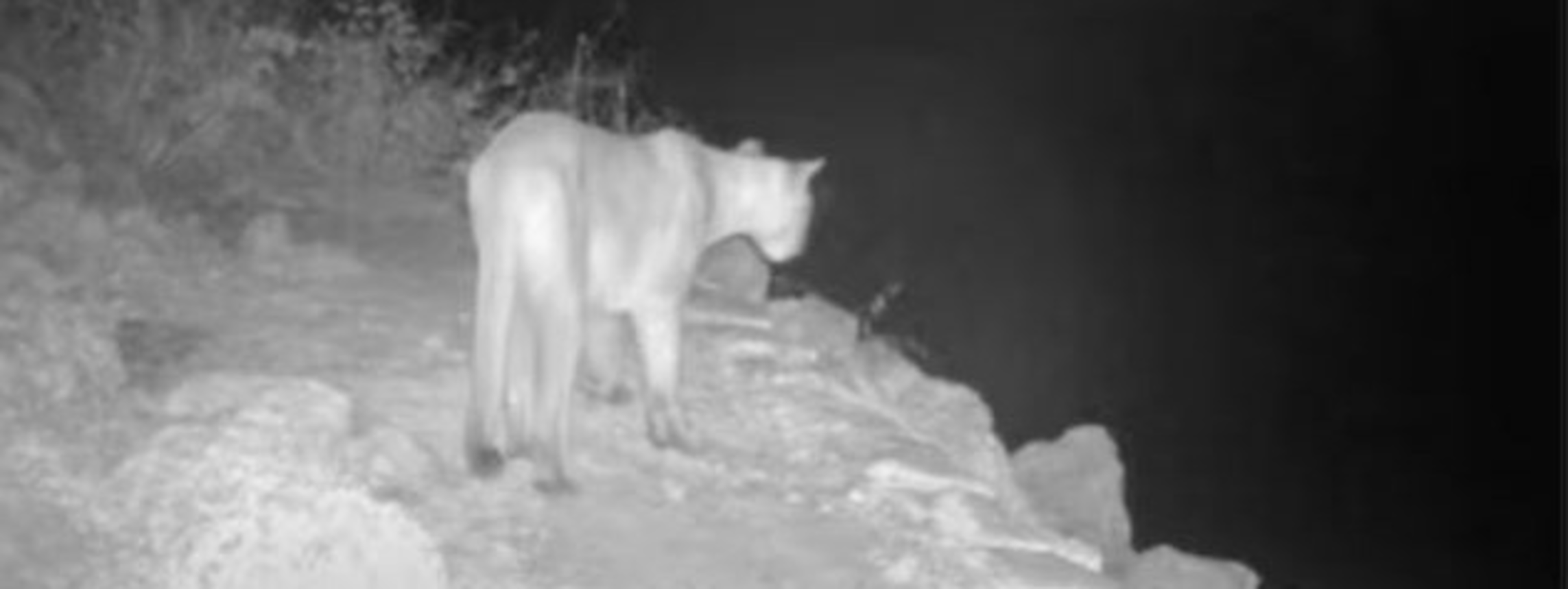
But then he’ll spot a bear track, or maybe a panther‘s, and he’s reminded.
Photos by the fStop Foundation, for which Freund is the president and co-founder, document wildlife crossings in the state. Officials develop these passages, often underneath bustling roads, to provide creatures a safer way to cross expansive streets.
“It’s all worth it, and you know, even under the highway, there’s this beauty,” Freund said.
Animal advocates say these crossings are necessary to connect wild spaces fractured by roads. But cost, feasibility and bureaucracy can cause these projects to take years to finish, making it hard to compete with rapid construction that is consuming habitat.
Images and video of animals using the crossings help with conservation research, and are a key to securing funding for more passages across the state, said Brent Setchell, an engineer for the state’s transportation department.
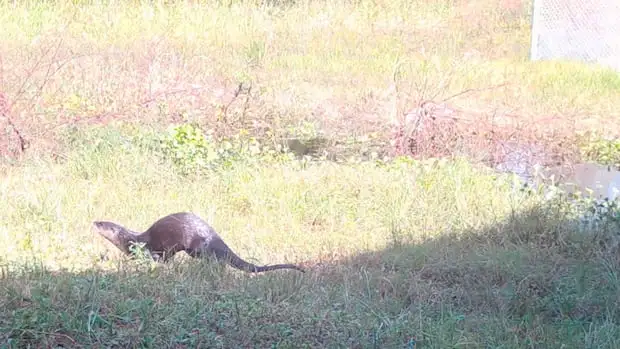
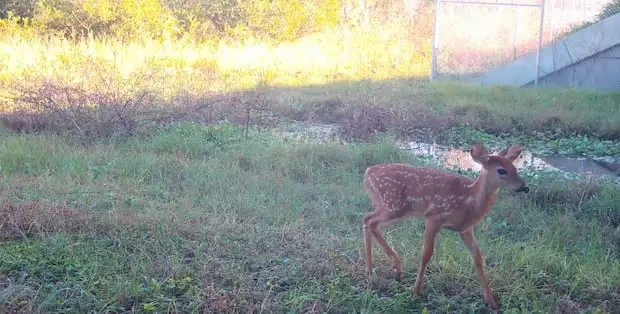
In Polk County, where the Florida Department of Transportation recently completed one of these passages along Interstate 4, cameras captured fawns nursing, raccoons skittering and an otter running along the flowing creek.
“There was nothing there before,” Setchell said. “It’s really amazing to see how quickly wildlife have adapted to the crossings and started utilizing it in just a couple months time.”
Why Florida has wildlife crossings
Federal officials estimate up to 2 million crashes between large mammals and drivers happen each year in the country, according to a report made to Congress in 2008. The federal government has not completed another study if its kind in the years since, likely making the numbers outdated.
In the same report, officials estimated about 200 people a year died in these crashes.
While the state’s transportation department does not track crashes, it can use data from the Department of Florida Highway Safety and Motor Vehicles and the Florida Fish and Wildlife Administration.
The former can record a crash between a driver and an animal, but does not record the species. The latter tracks collisions involving a Florida Black Bear or Florida Panther because of their protected status.
Wildlife crossings are not new. Florida has more than 200, with more planned in the coming years. A few are in the Tampa Bay area, concentrated in Pasco County along the Suncoast Parkway.
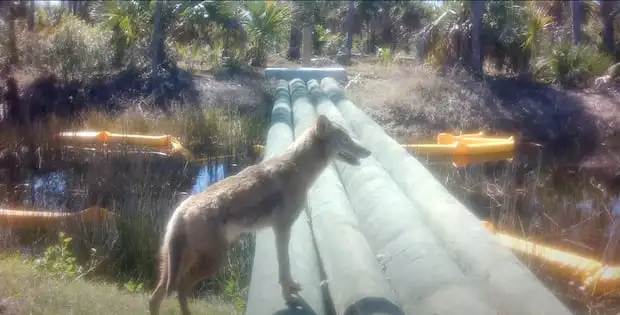
Florida’s first wildlife crossings were in Alligator Alley, when the state installed Interstate 75, according to the state. Planning began in the 1970s, and by the early 1990s, 24 animal passages were installed along a 40-mile stretch of the road.
Over the years, officials have installed 60 of these sites for panther use.
They have proven to be the most effective way to reduce crashes between cars and wildlife, according to the Florida Fish and Wildlife Conservation Commission.
“It provides a safer passage for both motorists as well as the wildlife,” Setchell said.
These crossings connect splintered habitats, allowing for animals to move and live in different areas, enhancing genetic diversity within species.
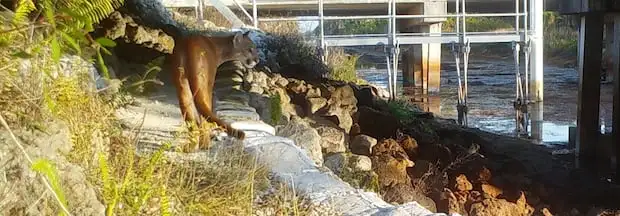
The Florida panther — an endangered species — roams largely in South Florida. The state estimates 130 to 230 adults remain.
This year, 30 panthers have died, the deadliest span for the species in over five years. Of those recorded deaths, vehicle crashes killed 23 panthers, including a 3-year-old male discovered Friday.
Since the turn of the century, panther deaths, particularly from cars, have increased as Florida’s population has expanded.
From 1980 to 1999, cars killed an average of fewer than two panthers a year. In the past decade, an average of about 23 panthers are killed a year on the roads.
More than a thousand miles of major roads are within the state’s wildlife corridor, said Jason Lauritsen, the chief conservation officer for the Florida Wildlife Corridor Foundation.
The corridor — millions of miles of protected and unprotected patchwork land — is necessary for migration and the survival of imperiled species, he said.
It’s a race, he said, to connect habitat ahead of development.
“We don’t have lots of time,” Lauritsen said.
In recent decades, Florida’s population has exploded, leading to more roads and development.
“When you consider that more people are moving to Florida, more people are vacationing in Florida, the number of vehicles on the road is increasing,” he said.
“It’s less safe for wildlife to cross a two-lane road than it was five years ago.”
Cameras capture wildlife in action
Setchell came upon one of Freund’s cameras that had been set up to document wildlife in Sebring in 2019.
The camera even captured Setchell poking around, Freund said.
Setchell contacted Freund and asked if he’d use his cameras to document wildlife crossings. The Florida Department of Transportation has its own cameras, but the fStop Foundation adds extras eyes.
“I would have imagined, stereotypically, that I would have to be begging the Department of Transportation to let me put in the cameras and here you are asking me to do that,” Freund said.
Freund asked Setchell why. His response: He wants panthers to be around for his children.
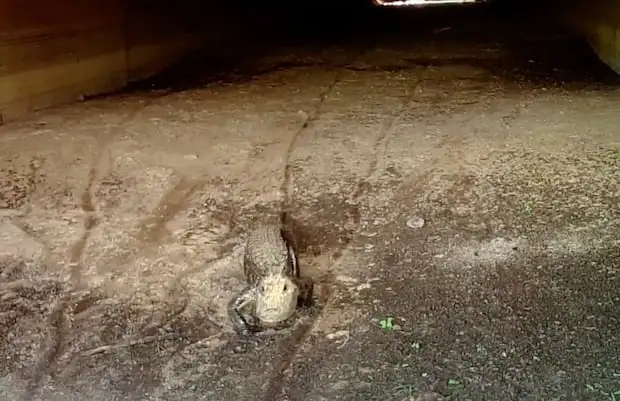
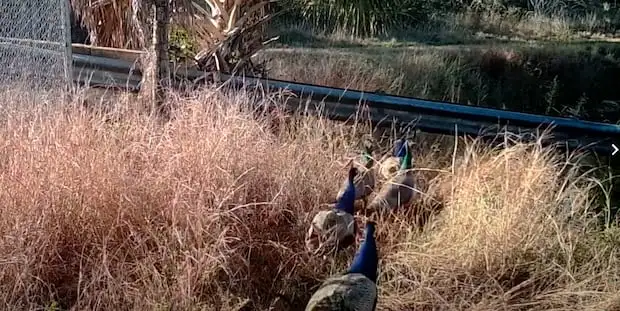
Cameras monitor creatures and how they travel during all project phases, from early stages, construction, and after the crossing is in place.
“It helps support both the funding of these crossings and showcasing that they work,” Setchell said. “It turns out absolutely they do ... we have the video proof.”
Yet while the crossings are effective, they’re also costly.
Wildlife crossings are typically installed as the state is changing or expanding a road. The I-4 crossing in Polk County was installed during a $72.5 million project replacing an interchange. Included in that cost was up to $10 million to create the animal passage.
While the cost of these projects varies widely, Setchell said base amounts for upcoming crossings range from around $6 million to more than $8 million. These are typically tax-payer funded projects, though grants also are available.
A 2021 Wildlife Crossings Pilot Project is providing $350 million in federal grants through 2026, though Florida was not chosen to receive funding in the first grant cycle. The state will find out if it was chosen in the next cycle in early 2025.
In January, the state will begin construction on a new crossing in Polk County. This one will be the first in Florida to pass over the highway, not under, and to be used only by animals. Other overpasses allow for both animal and pedestrian or biker use.
The location at I-4 and State Road 33 will connect the Saddle Creek and Tenoroc area of Polk County with the Green Swamp region to the north.
“They really are just so proactive about getting this done,” Fruend said of Setchell and his team. “It’s not always perfect — it takes a long time, but it’s happening.”
Florida animals use wildlife crossings. Pictures prove it.