
Newest Wildlife Corridor Expedition Connects with Original Trailblazers
New From Coast Breeze by Kelly Ferrell
Florida’s Wildlife Corridor is all about connection - a contiguous 18 million acres of water and land that connects people, panthers, and other wildlife. Now, with the newest trekkers completing the seventh expedition on November 22, the Corridor is connecting this generation with the journeyers who came before them.
The success of the Corridor is as much about protecting humans for generations to come as it is about securing space for today’s endangered species to recover, said Mallory Lykes Dimmitt, CEO of the Florida Wildlife Corridor Foundation, which was founded by wildlife photographer Carlton Ward, Jr.
“Our strategy is protecting the most at-risk areas before they’re lost,” said Dimmitt, who was among the four original trekkers with Ward, biologist Joe Guthrie, and filmmaker Elam Stoltzfus in 2012.
The Southwest Florida area has success stories with parks, preserves and conserved land as well as tens of thousands of acres in highly critical wetland areas that are in various stages of permitting for development, including the potential new town dubbed Big Cypress or Rural Lands West, among other names, and larger than Ave Maria to its north.
As three new trekkers, Em Kless, Kenton Beal, and Laura Foht, took their first steps on the most recent weeklong Strand to Slough Expedition beginning November 16, they embarked on a journey that allowed them to see firsthand the importance of the continued efforts of providing a path for panthers to roam, preventing a wildlife landlock in the Everglades and other areas of the state, while also securing drinking water, storm buffer, and agricultural lands, among other benefits the Corridor provides.
Their journey took them from Fakahatchee Strand Preserve State Park north to the banks of the Caloosahatchee River.
“We chose this area because this southwest edge of the corridor is one of these most at-risk areas of the Florida Wildlife Corridor with so much development proposed and planned in the area,” said Dimmitt.
The hope is that developers and planners will recognize the importance of this area now and for the future, not just for wildlife, but for humans with the storm resilience, water quality, and other benefits the area offers to surrounding cities, Dimmitt added.
While this year’s three expeditioners were not on the exact same path as the original team, they trekked the underpasses of the Corridor and checked on the camera traps, much like the journeyers before them.
The first expedition was a 100-day, 1,000-mile journey from Florida Bay to Oleander, Georgia that led to the Emmy Award-winning film, Path of the Panther.
This newest expedition also included a film crew and support team. Among them was filmmaker Page Buono.
“One of the things that strikes me so much in the conversation we’ve heard is there’s a chance to do this here. There’s actually connectivity, and it’s pinched and its patchwork in ways, but it’s here, and there’s a chance to keep it, and there are so many places where it’s gone, it’s lost, it’s gray,” said Buono, tearing a bit as her voice wavered.
“I didn’t expect to get emotional, but I think for me, the idea that this could be one area that stays green and that hopefully inspires other places,” said Buono.
That was her hope for this newest expedition and from the stories and films that come from it, she said.
The Corridor has come a long way and has a long way yet to go, expeditioners declared.
“The amazing thing, to look back across a dozen years, is that during the first expedition, the words ‘Florida Wildlife Corridor’ didn’t really exist with any meaning. It didn’t exist in the media, in the minds and hearts of Floridians,” said Ward.
“We were doing the first expedition as a branding effort to put this big nascent idea on the map. The science had been there for decades, what I brought to it was the story,” Ward added.
As Ward had focused his cameras on the endangered Florida panthers, setting camera traps on private and public lands along the way— and losing many cameras to nature— he also maintained a broader scope of telling stories of connection far beyond the singular species.
“Let’s make this a story that connects with Floridians and helps give a face to this landscape,” said Ward.
The connection the film portrayed was evident from its debut at the Naples International Film Festival in 2022 in several ways, including when Betty Osceola of the Miccosukee Tribe of Indians of Florida stood beside cattlemen and ranchers and spoke of the commonalities that the “Cowboys and Indians” shared as advocated for the Corridor, as they do to this day.
“Now, we have the next generation of expeditioners and trekkers, who, you know, this is their corridor. The story belongs to them. It belongs to their kids. And to have been a part of that fabric, a part of that legacy is really encouraging,” said Ward.
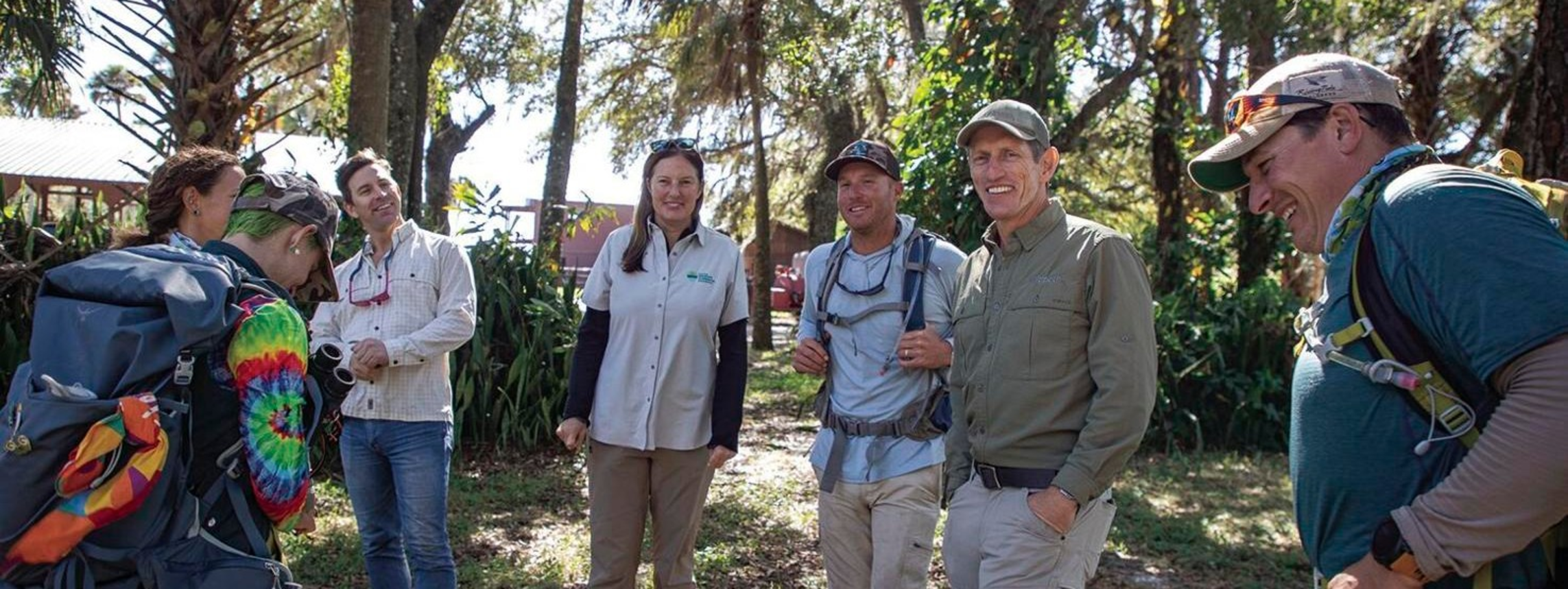
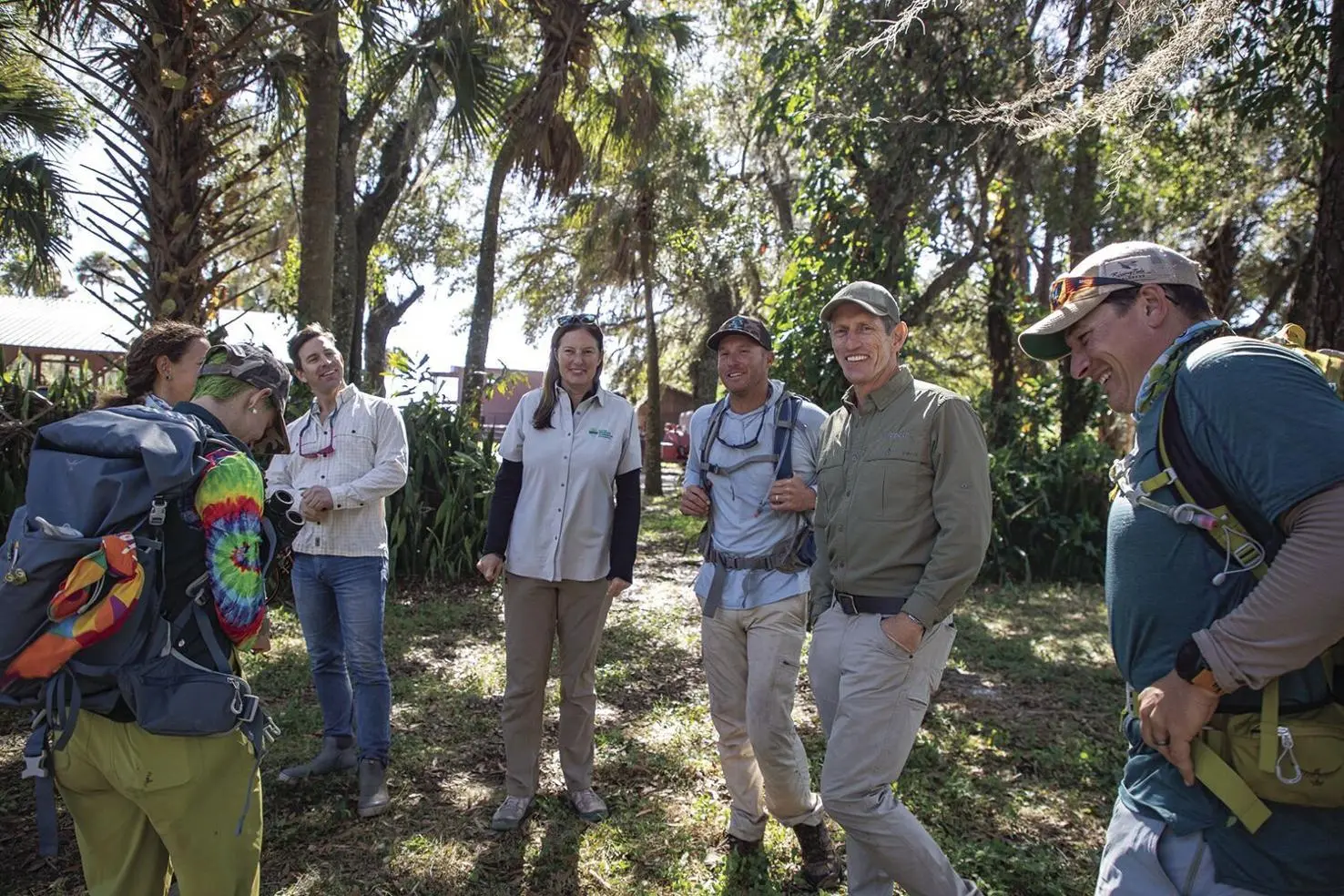
The newest generation of trekkers proclaimed the name “Jolly Panthers” for themselves and expressed joy meeting the originals.
“Being with the OG trekkers I felt awestruck at what they had achieved and where their dream started. It made me feel confident that every person can contribute to making meaningful change in their community,” said Kless.
Many people and partnerships have helped shape the Corridor into the reality it is today.
“There was so much unknown during the first expedition. This was all a theory, whether we could get here, whether we can get to the end of the journey, whether the landowners will still let us cross, whether we were going to be able to make it work,” said Ward.
"So, every day was a new day and big question mark of whether we’d get to the next phase,” he added.
Now, the trekkers not only walk in their footsteps but share their new stories in their own families, classrooms, businesses and communities.
They, too, began in preserved public lands and then through private areas not yet dedicated to conservation.
“They’re coming off places like Fakahatchee Strand, Big Cypress National Preserve, Picayune Strand. They are part of 4 million acres of contiguous public land. That’s an area twice the size of Yellowstone National Park. It’s a huge, globally significant conservation habitat that’s kind of hidden in plain sight in the southern tip of Florida,” described Ward.
Then comes the areas of opportunity for the Corridor, he said.
“And, what’s connecting that area to the rest of the state and the rest of the country is the Florida Wildlife Corridor, and more specifically, its working lands,” said Ward.
When leaving Big Cypress National Preserve north, what’s next is a cattle ranch or citrus grove.
“Whether those ranches or groves are still there is really what determines whether the Everglades stays connected to the rest of the state and country or whether it gets cut off as an island at the southern tip of the peninsula,” said Ward.
This November, much as it was 12 years ago, an evolving story is told, one that changes from successes of the “huge public conservation legacies to huge private conservation opportunities,” said Ward.
“And that’s the decision that’s going to happen in this next decade. Like, are we going to save enough of that private land to save a connected corridor? Or are we just documenting a moment of time that can be lost?” questioned Ward aloud.
His words and the path he blazed with the original expedition moved the newest trekkers.
“It was incredible to experience the wilderness that has been preserved in Southwest Florida adjacent to the development pinch-points. I kept picturing myself as a mother panther trying to find enough territory to raise her young. It is disheartening to realize she may not have enough land to safely do so,” Foht said.
The newest trekkers enjoyed a day hiking with Ward, Guthriee and Dimmitt, the originals, enjoying meaningful conversations by the campfire.
“I returned home energized and high on hope to support a contiguous Florida Wildlife Corridor. May we prioritize time to appreciate the wild outdoors with family and friends,” Dimmitt said.
The journey is not over.
“There’s a ton of reasons for hope and there’s tons of reason for motivation and concern that we need to hurry up because the rooftops are coming,” said Ward.
“They’re squeezing in from both coasts, and it’s the next decade that’s really going to decide the fate of this connection,” Ward said.