
Florida Wildlife Corridor Protections Grow by 79,828 Acres with Yearend Conservation Approvals
The Florida Governor & His Cabinet’s Additional Approvals of 5,689 Acres Adjacent to the Corridor Bring Total to 85,517 Acres

Map by Angelina Meeks/Live Wildly Foundation
TALLAHASSEE, FL – On December 17, the Florida Governor and Cabinet approved funding for the permanent conservation of 85,517 acres across nineteen properties within and adjacent to the Florida Wildlife Corridor. This historic achievement, a testament to collaboration among state agencies, landowners, and conservation partners, marks a significant step toward protecting Florida’s natural landscapes, wildlife habitats, and working lands for future generations.
The newly approved conservation efforts include 79,828 acres within the Florida Wildlife Corridor and an additional 5,689 acres on adjacent properties through the Rural and Family Lands Protection Program of Florida Department of Agriculture and Consumer Services (FDACS) and Florida Forever of the Florida Department of Environmental Protection (FDEP). The properties span ranchlands, forests, springs, and critical ecological connections that ensure wildlife movement and habitat protection across Florida.
“This milestone showcases the power of collaboration in conserving Florida’s wild and working lands,” said Mallory Dimmitt, CEO of the Florida Wildlife Corridor Foundation. “Thanks to the leadership of landowners, Rural and Family Lands Protection Program, Florida Forever Program, and our conservation partners, we’ve taken a major step forward this year by approving the total protection of 128,047 acres. The Rural and Family Lands Protection Program’s achievements are particularly notable—these approvals represent a 50% increase in project approvals since the program began. This is a shining example of how working together can achieve the vision of a permanently protected Florida Wildlife Corridor.”
Fourteen of the properties will be protected through conservation easements funded by the Rural and Family Lands Protection Program at FDACS. Six properties, including two conservation easements and four fee acquisitions, will be funded through Florida Forever at FDEP.
These conservation efforts ensure the protection of diverse landscapes, such as Montsdeoca Ranch, Upper Shoal River, and Bear Creek Forest, while creating opportunities for recreation, ecotourism, and enhancing habitat connectivity throughout the Florida Wildlife Corridor.
The Florida Wildlife Corridor Foundation celebrates the collaboration and leadership of landowners, FDACS, FDEP, Florida Conservation Group, Trust for Public Land, Saunders Real Estate, and additional partners who played essential roles in making these opportunities possible.

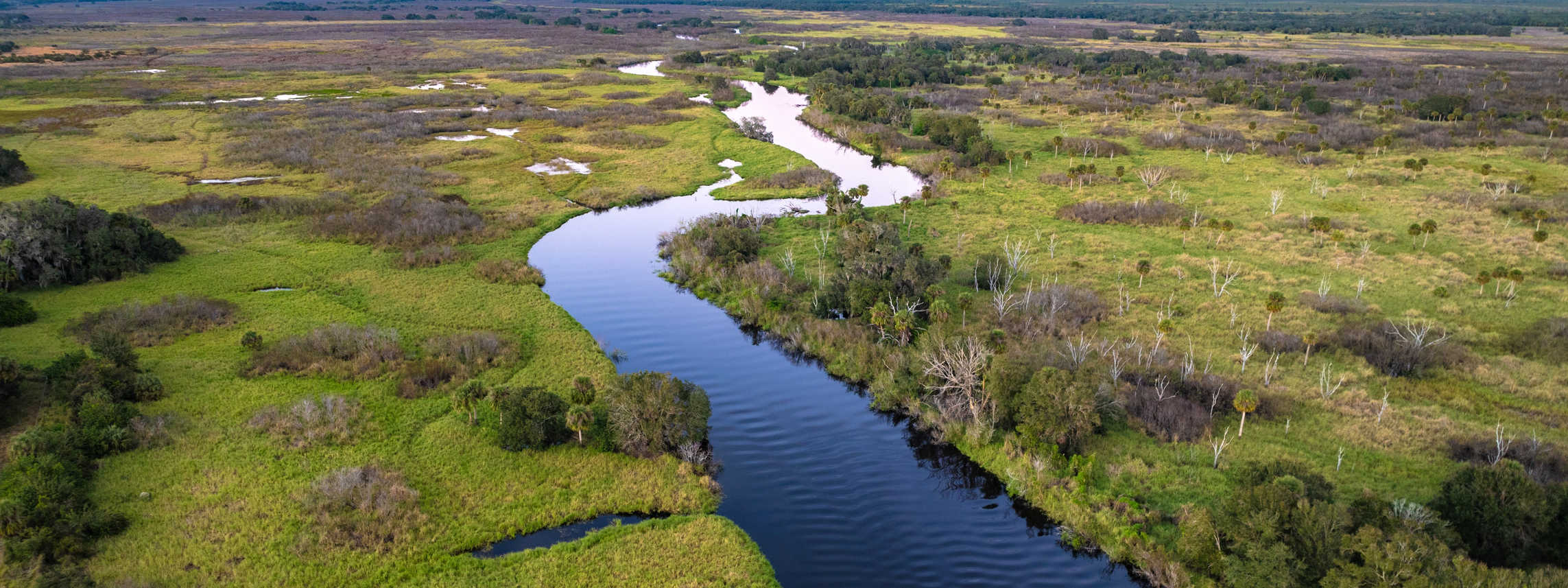
Photo by KT Bryden/Wildpath
The parcels in the Florida Wildlife Corridor approved during the December Cabinet meeting include:
- An acquisition in Calhoun and Gulf Counties of 12,243-acres within the Bear Creek Forest through DEP’s Florida Forever project and the Florida Forest Service. Bear Creek Forest is located east of Panama City and runs along the Calhoun and Gulf County lines. The property is situated within the St. Andrews Bay Watershed, a delicate ecosystem that manages stormwater runoff, safeguards water quality, offers flood protection, and replenishes aquifers and drinking water supplies. Protecting this property delivers significant benefits for water quality and quantity in Florida’s central panhandle, enhances the corridor of publicly owned lands stretching from Eglin Air Force Base to Apalachicola National Forest, and preserves habitats for species such as the pine-woods aster, flatwoods salamander, gopher tortoise, Florida black bear, and Bachman’s sparrow.
- A conservation easement in Levy County of 11,713 acres, a project of FDACS Rural and Family Lands Protection Program from Trailhead Blue Springs, LLC. Trailhead Blue Springs is a working agricultural landscape that encompasses pine plantation and low-density cattle operation in Levy County. It envelops portions of the Waccasassa River and nearly all of Devil’s Hammock Wildlife Management Area, providing critical corridor linkages. There is a diverse set of native land cover types across the property, most of which are forested wetlands. The floodplain forests of the Waccasassa and Little Waccasassa rivers transition to large cypress and hardwood forests surrounding the agricultural operations throughout the property and contribute to the protection of numerous springsheds.
- A conservation easement in Dixie County of 6,414-acres, a project of FDACS Rural and Family Lands Protection Program from Anderson Land & Timber. Anderson Land & Timber is situated between the Gulf of Mexico to the west and the Suwanee River to the east. The surrounding land consists of planted timber among a wetland complex of marshland and floodplain swamp. The property is surrounded by other conservation lands, providing critical linkages in the corridor. The property supports a variety of animals, including deer, turkey, wading birds, and eagles.
- A conservation easement in Glades County of 6,123-acres, a project of FDACS Rural and Family Lands Protection Program from the Peeples Family. The Peeples Family Ranch is a working cattle ranch that consists of large expanses of pasture with small inclusions of natural non-forested uplands, non-forested wetlands, and forested uplands. The property has suitable habitat for the endangered Florida panther, Florida scrub-jay, and crested caracara.
- A conservation easement in Escambia and Santa Rosa Counties of 5,910-acres within the Coastal Headwaters Longleaf Forest through DEP’s Florida Forever project. The Coastal Headwaters Longleaf Forest Florida Forever project preserves working forest lands and provides resource protection for the adjacent Escambia River watershed. The property contributes to the cleaning and filtering of surface waters by recharging the surficial aquifer and providing an additional buffer to the Escambia River and its floodplain forests that function as a wildlife corridor to many imperiled species such as the swallow-tailed kite, gopher tortoise, Florida black bear, reticulated flatwoods salamander, and red-cockaded woodpecker.
- A conservation easement in Martin County of 5,874-acres, a project of FDACS Rural and Family Lands Protection Program. Bull Hammock Ranch is a working cattle ranch consisting of scattered wetlands and an upland forested area in Martin County. The property is located approximately 6.5 miles west of Interstate 95. Development pressures are mounting from the north, south, and east due to overpopulation along the coastal areas. The permanent protection of this property provides vital habitat for crested caracara and bald eagles, which have both been documented on Bull Hammock.
- A conservation easement in Dixie County of 5,737-acres, a project of FDACS Rural and Family Lands Protection Program from Eight Mile Properties, LLC. Eight Mile is stewarded by a pioneering Florida agricultural family and is a mosaic of timber plantation and forested wetlands, including a corridor of wetlands following Eight Mile Creek. It is a vital puzzle piece in a matrix of conservation lands in the region and will protect regional water quality by maintaining the integrity of surrounding waterways and their springsheds. The property hosts abundant wildlife species, including the Florida sandhill crane, Florida burrowing owl, Eastern indigo snake, gopher tortoise, Florida black bear, wood stork, and Suwannee cooter.
- A conservation easement in Glades County of 5,610-acres, a project of FDACS Rural and Family Lands Protection Program from the Hendrie Family. Located on the eastern slope of the southern Lake Wales Ridge, Hendrie Ranch has been managed by the Hendrie family for over 65 years for beef and timber production and its importance to the greater Fisheating Creek conservation landscape. It maintains a herd of approximately 600 beef cows and often hosts the Archbold Biological Station for scientific research. Along with the common Florida black bear, rare species include the Florida scrub-jay, sandhill crane, Florida mouse, and Sherman’s fox squirrel, among many others. A historic cowboy camp dating from the 1940s is still used by cattlemen on Hendrie Ranch.
- A conservation easement in Highlands County of 4,692-acre, a project of FDACS Rural and Family Lands Protection Program. Montsdeoca Ranch is a working cattle ranch along the Kissimmee River comprised mostly of pasture with isolated wetlands and small pine flatwoods. It is also located within the Avon Park Air Force Range Sentinel Landscape and the Everglades Headwaters National Wildlife Refuge and Conservation Area. Montsdeoca Ranch has been owned by members of the same family for over 108 years. The property supports a wide range of wildlife species, including game species like turkey, deer, and various wading birds. Listed species on the property include Crested Caracara, Florida Burrowing Owl, and Eastern Indigo Snake. This property is also likely to support the Florida grasshopper sparrow and other rare dry prairie species.
- A conservation easement in Osceola County of 4,204 acres, a project of FDACS Rural and Family Lands Protection Program. Overstreet Ranch is a large-scale cattle ranch located within the Avon Park Air Force Range Sentinel Landscape and in the Everglades Headwaters National Wildlife Refuge and Conservation Area. The Overstreet family also farms a citrus grove and sod operation on the property. The ranch provides critical habitat for a variety of species including burrowing owls, eastern indigo snake, eastern diamondback, Florida panther, Florida black bear, and snail kite.
- A conservation easement in Madison County of 3,382-acres, a project of FDACS Rural and Family Lands Protection Program. The Keith Whaley Ranch is a working cattle ranch near the Aucilla River and consists of timber plantation with extensive wetlands. It is mostly contained within the Aucilla and Wacissa Watershed Florida Forever project, providing critical linkages in the Florida Wildlife Corridor
- A conservation easement in Okeechobee County of 2,996-acres, a project of FDACS Rural and Family Lands Protection Program. Most of the acreage in Williamson Cattle Company East is identified as Strategic Habitat Conservation Areas, supporting rare and vulnerable species including the Florida panther. The protection of this property is a natural extension of the protected lands occurring in the Northern Okeechobee Watershed and Lower Kissimmee Basin, facilitating landscape connectivity throughout the state.
- A conservation easement in DeSoto County of 2,718-acres, a project of FDACS Rural and Family Lands Protection Program. French Golden Gate is a working cattle ranch with row crop farming interspersed with numerous wetlands and flatwoods in northern DeSoto County. The property is located in the upper Peace River watershed, where surface water from the southern portions of the property flows to Joshua Creek. The farming operation rotates crops of watermelon, cucumbers, and hay, and includes fire-maintained slash pine flatwoods that support abundant native wildlife and plant species.
- An acquisition in Volusia County of 1,335-acres within the Volusia Conservation Corridor through DEP’s Florida Forever project. Located in central Volusia County, the property contributes to a corridor of conservation lands extending from the Ocala National Forest south to Fort Drum Marsh. The property is situated in the Deep Creek St. Johns River watershed and contains two significant basin swamps that run from north to south that drain into Lake Ashby and Spruce Creek Swamp. The ranch also provides crucial habitat connectivity and protection for rare and imperiled species such as the Florida black bear, wood stork, gopher tortoise, and southeastern fox squirrel.
- A conservation easement in Polk County of 764-acres within the Green Swamp through DEP’s Florida Forever Project. The mosaic of cypress swamps, pine forests, and pastures known as the Green Swamp is vital to the water supply of Central Florida. The Green Swamp gives rise to four major river systems and is important for maintaining the flow of water from the Floridan Aquifer. By preserving the combination of land uses in the region, the Green Swamp protects the Floridan aquifer and several rivers. The property is located just south of Interstate 4, the property will provide a critical buffer with existing conservation areas and the rapidly growing region between Tampa and Orlando. The land provides habitat for many native Florida species such as sandhill crane, gopher tortoise, bald eagle, and Florida black bear.
- An acquisition in Polk County of 113-acres within the Catfish Creek Project through DEP’s Florida Forever project. The Catfish Creek Florida Forever project extends over the high scrub ridges and relic sand dunes of the Lake Wales Ridge geological complex and is centered between the shoreline of Lake Pierce, Lake Hatchineha, and Lake Rosalie. The property has over 6,000 feet of frontage on Lake Pierce and is within the Upper Kissimmee Basin. The protection of this property will help protect water resources by restricting development. Previously utilized as a lodge and educational complex, the property has infrastructure that will support recreation and educational opportunities to the adjoining state park.
The parcels adjacent to the Florida Wildlife Corridor include:
- An easement in Okeechobee County of 2,788-acres, a project of FDACS Rural and Family Lands Protection Program. One Nine Cattle is a family-run cattle operation located within the Everglades Headwaters National Wildlife Refuge and Conservation Area and the Avon Park Air Force Range Sentinel Landscape in Okeechobee County. They also lease out land to farmers for green beans and watermelon. The protection of this property is a natural extension of the protected lands occurring in the Northern Okeechobee Watershed and benefits a variety of wide-ranging wildlife species such as the Florida panther and Florida black bear.
- An acquisition in Walton County of 2,483-acres within the Upper Shoal River through DEP’s Florida Forever Project and the Trust For Public Land. The Upper Shoal River Florida Forever project aims to conserve timber resources within the Upper Shoal River watershed, protect unaltered and intact natural seepage streams, and provide habitat for imperiled species including the blackmouth shiner, gopher tortoise, and eastern indigo snake. Given its proximity to Eglin Air Force Base, this property highlights an important overlap between the state’s environmental conservation initiatives and the military’s need to create buffer zones around existing installments. As Florida’s newest state park, the subject property will provide opportunities for camping, hiking, biking, and access for the expansion of the state-designated Shoal River Paddling trail.
- A conservation easement in Polk County of 418-acres, a project of FDACS Rural and Family Lands Protection Program. Raley Grove has long been owned by the Raley family and used in citrus production. The stands of trees range between 2 and about 30 years old. The surrounding area is primarily citrus grove and pasture but also includes lakes Annie, Ada, and Josephine.
To help understand the importance of these land parcels and visualize the land, Wildpath has developed a media kit with photos, video footage, and maps representing the newly approved properties. Please feel free to download and use these materials.
About the Florida Wildlife Corridor Foundation
The Florida Wildlife Corridor Foundation champions a collaborative campaign to permanently connect, protect and restore the Florida Wildlife Corridor – a statewide network of connected lands and waters that supports wildlife and people. The organization uses rich storytelling, rooted in science, to heighten the visibility of the Florida Wildlife Corridor and inspire protection of the missing links in the Corridor. To learn more, visit floridawildlifecorridor.org or connect on social media @floridawildlifecorridor.