
Nature’s balance: Sense of urgency discovered in Wildlife Corridor expedition
By Kelly Ferrell
Three trekkers experienced firsthand what is at stake in Southwest Florida’s Wildlife Corridor on a week-long journey through nature dubbed the Strand to Slough Expedition.
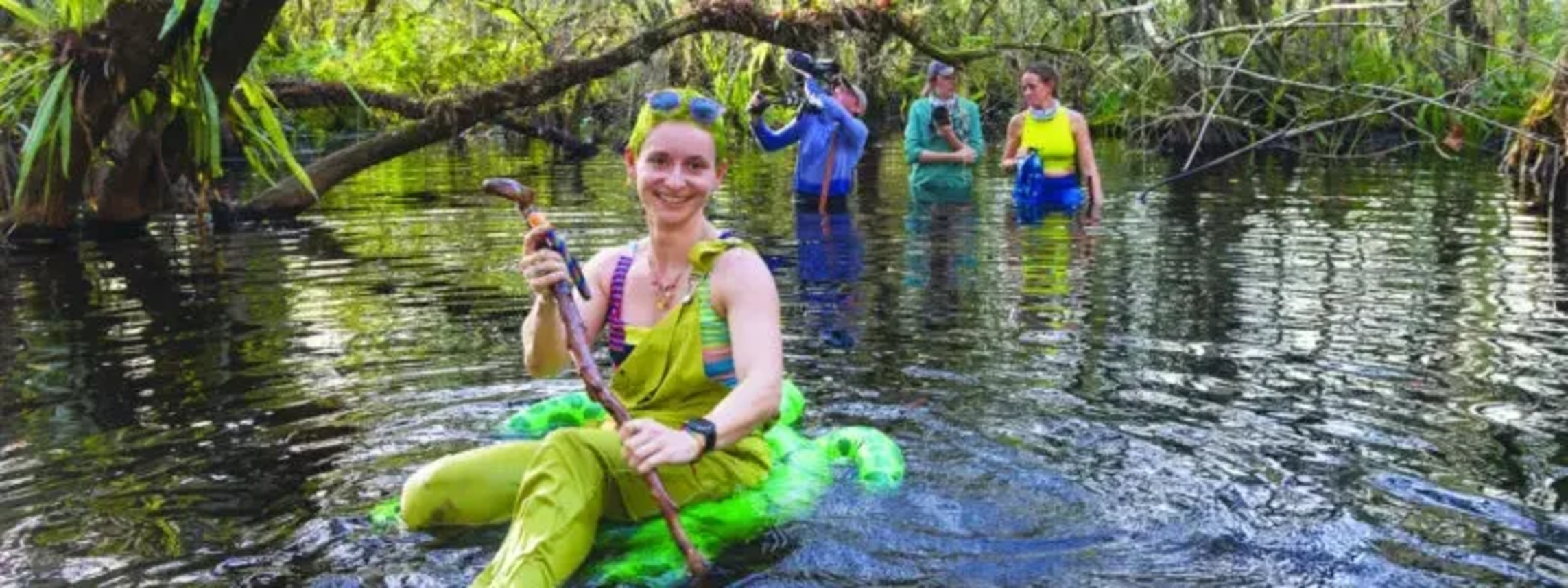
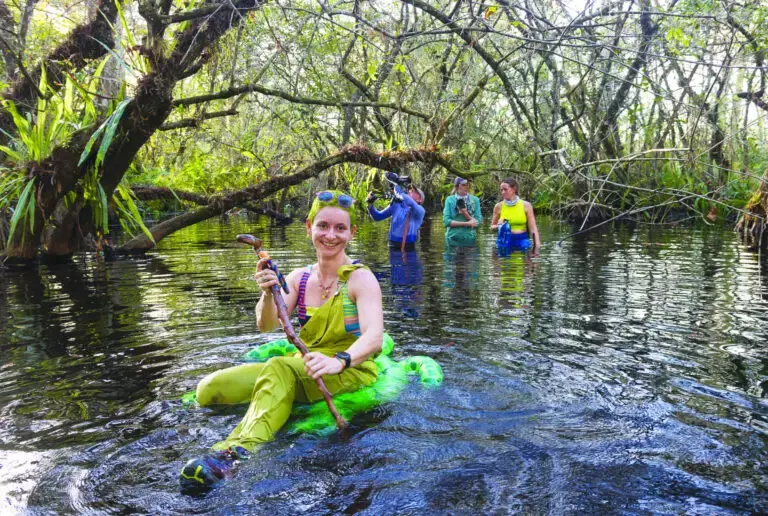
Em Kless, Kenton Beal and Laura Foht bicycled, kayaked, walked, camped — and floated on an inflatable turtle — through private and public lands Nov. 16-22. They traversed areas that are already under conservation, as well as areas that are especially vulnerable to development. They explored a critical portion of the 18 million contiguous acres of the Florida Wildlife Corridor that has many thousands of acres of developments in various permitting stages in Collier and Lee counties.
Trekkers expressed a connection with each other from the outset, riffing off each other’s sentiments and words just one day after first meeting each other.
“We all sort of have the same feeling about the power of nature,” said Beal, a consultant for private companies seeking to mitigate the environmental effects of development.
“It’s heard in the whisper of the wind through the sable palms,” Beal said.
“The sounds are like a choir,” chimed in Kless, of Naples Botanical Garden.
“It takes me to the book Braiding Sweet Grass, and the stories of the spiritual connections,” added Foht, a fine arts teacher at Community School of Naples, referring to the book by botanist Robin Wall Kimmerer that expressed the importance of Indigenous knowledge.
This connection strengthened in the following days once the expedition began with trekkers gathering at Fakahatchee Strand Preserve State Park to bicycle Jane’s Scenic Highway, a narrow, 11-mile road of dirt and mud in the western Florida Everglades.
“There is no choice between human society and nature,” Kless said. “There is an illusion that we are separate from the land and water and wild species, but their health is our physical, economic and emotional health.”
Kless, Beal and Foht walked in the footsteps of the trekkers from the six treks that occurred before them, including the original 2012 expedition. The original expedition included four trekkers who journeyed 1,000 miles over the course of 100 days from Florida Bay to Oleander, Georgia. That initial expedition was the birth of the Corridor and led to the 2022 Emmy-winning film Path of the Panther.
This seventh trek was similarly joined by filmmakers, this time three women from Days Edge Productions, as well as a support crew.
During that first journey, the Wildlife Corridor was not yet part of the Florida vernacular.
Now, 12 years later, the expedition may be shorter, but the journey is as important, as they traversed a landscape that is uniquely inhabited by endangered and threatened species with development plans looming.
They began the journey Saturday afternoon by bicycling about 15 miles from Fakahatchee Strand toward Picayune Strand. The three then kayaked north along Miller Canal and camped with the film crew and guides, including Ryan Young of Rising Tide Explorers and Naples Outfitters. They then continued from those coastal wetlands to cattle country, traveling north through Audubon’s Corkscrew Swamp Sanctuary and the Okaloacoochee Slough and ending on the banks of the Caloosahatchee River.
Foht was most looking forward to sharing this experience with her students upon her return.
“There is an increasing disconnect between nature and kids. It’s important for them to see that I’m having fun out here,” she said.
“A lot think I’m going to die,” she said at the outset. But instead, nature is life-giving, she affirmed upon her return.
Her students soon followed in Foht’s footsteps, experiencing their own field trip to Corkscrew Sanctuary after the trek, where Foht was able to put her fresh perspective into her teaching.
Kless was particularly inspired to join the expedition with the opportunity to spend more time in the Fakahatchee, which she described as the Amazon of North America and one of the most distinctive areas in the U.S.
Beal returned from the trek to his work in environmental land banking and mitigation, where he helps developers offset the effects their projects have on wetlands, nature and the environment in a way that maintains the intent of the Clean Water Act, he said.
“I recognize the challenge the Florida Wildlife Corridor faced in the outreach to landowners,” Beal said.
While people may not necessarily want to change their quality of life, the Corridor is offering an opportu-nity for landowners to expand their legacies to include protection of the natural environment for the future, Beal said.
“The science is all there on the importance of preserving nature, and the science is clear on the importance of preserving certain species,” he said.
Purchasing properties for protection from overdevelopment is necessary for generations to come, he added. “It’s amazing what the partnerships of the Corridor have been able to do,” Beal said. “Still, there’s more to do.
“We all recognize that development will continue as the population grows. Many families have been in Florida for generations, many residents are new, but one thing remains: We all rely on the land below us, and protecting it helps protect us all.”
Former Senate President Kathleen Passidomo (R-Naples) was one of several legislators who also blazed a trail, so to speak, for the newest trek. A supporter of the Corridor since its earliest days, she helped pass the bill that made way for the Corridor and later for the Florida Wildlife Corridor Act to help further fund it.
“And we hit the ground running,” Passidomo said.
Funding has included $300 million in Rural and Family Lands Program funds to help farmers preserve their working lands, she said. Another $100 million in recurring revenue has been dedicated each year. Negotiations with the Seminole Tribe bring in another $650 million each year to purchase rural lands for the Corridor.
The Florida Wildlife Corridor is ultimately beneficial to all, Passidomo said: “Providing incentives so farmers and ranchers stay on their land to farm and ranch provides a win-win-win.”
Ranchers and farmers keep their land; residents keep local food sources at sustainable prices; aquifers are protected; storm buffers are maintained; and wild animals have space needed to roam and remain for generations to come.
“Being out on the bustling roads between land preserves, seeing acres and acres of property that bulldozers are set to roll over, brought a sense of urgency to the trek,” Kless said.